Celeste Greenberg, who now designs the jewelry line Tuleste Market, claims that the design came from a vintage pendant that she sourced for Bensimon. The two allegedly made a verbal agreement to manufacture replicas of the owl and split the profits. Bensimon, who has produced and sold both pendants (below) and clothing (left) bearing an owl design, denies that that there was any such deal.
The real legal issue, however, may be the provenance of the original pendant. Since jewelry is subject to copyright protection under U.S. law, the initial owl design could belong to someone else entirely, depending on its age and whether it was registered. And, given the potential for publicity-generated profits, the original designer may very well give a hoot.
The much-hyped stateside opening of Topshop, the British fast-fashion chain, won't take place until Thursday, but the free promotional tote bags being handed out around NYC have already raised questions of copying. A Racked reader considers the design suspiciously similar to liner notes of albums from the French record label Kitsune...
...but from a copyright infringement perspective, Counterfeit Chic is unconvinced. The styles are similar, but none of the actual drawings appear to be repeated. Moreover, the Topshop tote adds garments, cupcakes, and even a horse's head to the mix. Perhaps they both came from the same artist, or perhaps the ur-text was the junior-high spiral notebook of a budding caricaturist.
Either way, Topshop would probably come out on top in the event of a challenge.
How does Italian designer Roberto Cavalli feel about being copied?
On a recent episode of the Style Network's Running in Heels, one of the featured interns gets a chance to find out, courtesy of questions from her editors at Marie Claire.
Cavalli's dislike of being copied by "big designers" follows a typical pattern of response. As in all creative media, from fiction to architecture, some artists are "inspired" by others. When this search for inspiration crosses a certain line, however, noses get out of joint and the reputation of the copyist suffers -- whether or not the law in a particular jurisdiction has any say in the matter. Watch out for copying that is (1) too literal, (2) too close in time to the original, or (3) in too similar a market niche.
Hence Cavalli's reaction to alleged copying by other famous fashion designers. The more-is-more master of mixed jungle patterns and baroque jewelry can fend off lesser lights (to some extent) via the power of his label, but peer-on-peer pilfering is a more direct threat. Especially since Roberto is in the process of expanding his more accessible Just Cavalli line.
So, why wouldn't Cavalli name names? Or at least whisper in the ears of the lovely ladies from the magazine with the long-established "Splurge or Steal" feature? After all, social censure only works when the culprits are identified.
Cavalli's uncharacteristic coyness may have resulted from the fact that all of the parties in the room -- with the possible exception of the intern -- could already guess the prime suspects. And presumably the more fashion-savvy viewers at home immediately started guessing. At times, inuendo can be far more powerful than direct accusation.
In other words, why start an on-camera cat fight over leopard print when you can achieve the same effect with a catty suggestion?
For more than a decade, scientists have been alarmed by the decimation of frog populations around the world. Not only did the disappearance of the frogs set off a frantic search for the cause, but many worried that it heralded the collapse of the global ecosystem.
Mystery solved?
Designer Jean-Charles de Castelbajac, who in the '80's created a teddy bear coat worn by Madonna and others as a statement about fur, has apparently slaughtered dozens of Kermits for this Fall 2009 look. Whimsical design or green manifesto? And perhaps even more importantly, does intellectual property-conscious Disney -- which acquired the Muppets in 2004 -- know?
Designer Karl Lagerfeld never uses the word "cheap" -- at least when it comes to fashion. In his oft-repeated quip, "People are cheap. Clothing is either expensive or inexpensive."
Even the Kaiser might make an exception for a dress that recently appeared on the runway in Milan, however. Not only was it officially designated "cheap" -- as in the "Moschino Cheap & Chic" label -- but it also bears a suspicious resemblance to a dress created by a young New York designer.
Anya Ponorovskaya owns and designs for three Girlcat boutiques, two in Manhattan's Nolita neighborhood and one in Brooklyn. Her flattering Audrey dress (below left) is a bestseller, and comes in multiple colors. Look closely at Anya's design -- and then check out the Moschino dress (below right). Yes, the overall look is relatively simple, but would you expect even the curve of the pocket to follow the same line?
Legally speaking, an Italian fashion house like Moschino could face a lawsuit if it copied at home, since European fashion designers (and many others around the globe) are protected by intellectual property law. A quick trip to the U.S., however, represents a completely legal opportunity to cherry-pick the designs of the local talent.
Maybe Moschino designer Rosella Jardini and her team did, and maybe they didn't. But to clients and friends familiar with Anya's designs, it sure looks like a cheap trick.
Today's WWD offers a look at Isaac Mizrahi's Fall 2009 collection for Liz Claiborne, noting its playful plaid "flapper meets lumberjack" theme. But might this otherwise serendipitous encounter have taken place outside the boundaries of the imagination -- somewhere in the neighborhood of Burberry, perhaps?
No, the trousers don't quite incorporate the trademarked Nova check -- I don't think. But they do require a second look.
Apologies for the picture quality, by the way. WWD has a more complete and higher-res look at the collection online, but this particular look is cut off just above the curious cuffs.
Isaac Mizrahi is a high-octane combination of entertainer and fashion designer. He's starred in everything from a documentary film to a comic book to his own TV show, and his creations range from couture gowns to a groundbreaking partnership with Target. His next challenge is to revive the Liz Claiborne label, and early reports are quite enthusiastic.
Except for one. Jezebel's TatianaTheAnonymousModel did a double-take upon seeing pictures of Isaac's spring shoes, which strongly resemble Belgian Shoes' classic Midinette style in multiple colors. Trust a skyscraper-tall model, even an anonymous one, to know her flats.
Rumors of copying have swirled around Isaac before, from the late great Geoffrey Beene's file of alleged offenders to recent off-the-record whispers into the ears of your humble blogger. These pics, however, are presented as a smoking gun. The Midinettes currently available on the Belgian Shoes website even have a dark contrasting sole like Isaac's rather than one in the same color as the upper part of the shoe.
From a legal perspective, if Belgian Shoes claims that the Midinettes have over the years acquired sufficient distinctiveness that the style itself reminds consumers of the company, then it could bring a trade dress claim against Liz Claiborne. Of course, Liz would no doubt argue that the style is a classic one and that Isaac's tweaks (is that a pointier toe, perhaps? a lower vamp? a more compact bow?) distinguish his team's work. In fact, the style reminds me of a certain pair of my grandfather's brown bedroom slippers -- and he passed away decades ago.
Still, why risk unnecessary legal fees -- or disapproving editorial coverage -- in this market?
It's Monday, the evergreen trees have been kicked to the curb, and the last bits of confetti have been swept up from the streets. Tomorrow's Epiphany notwithstanding, the holidays are officially over. Whew.
Here's hoping that you started 2009 by kicking up your heels -- though not necessarily the Forever 21 pair recommended by Time Out New York (right), which bear a strong resemblance to a Christian Louboutin design from last spring (left). Interestingly, F21 may have been attempting to test the limits of CL's red sole trademark by creating an all-black pair with black soles and an all-red pair with red soles. Once again, an aesthetic functionality debate may be lurking out there somewhere, but it hasn't yet risen to the surface of the bargain bin.
Meanwhile, the inventors of the ubiquitous novelty spectacles with the new year's numerals are no longer looking at the world through rose-colored glasses. Richard Sclafani and Peter Cicero have decided to cease production, citing competition from cheap infringements of their design patent (D335,134). The Seattle Times reports:
"I get depressed on New Year's Eve," says Sclafani. "It used to be such a thrill to turn on the TV, and there were our glasses! Now, all I see is knockoffs."
It's been a while since Counterfeit Chic and friends have caught Forever 21 with its hand in the design cookie jar -- but it looks like the fast-fashion chain may be reaching for a holiday treat in the form of a knockoff Balenciaga bag. And we do mean almost the exact form.
The righteous Jennifer Moreno over at BagBliss sent word that F21 has come up with a "tragic bag, that's sure to tick off any devoted Balenciaga-lover." It's all there -- the angled Balenciaga corner buckles, the distinctive half-moon patch design, the extra-long zipper pulls, even the whipstitching below the handle, all in not-so-luscious faux leather. Only the slightly altered proportions of the knockoff (below right -- but you knew that) and the manner in which the handle is attached reveal the truth.
During the current economic meltdown, Balenciaga's classics are among the few things NOT marked down to drastic levels, a fact that F21 may have noticed -- and one that makes this copy even tougher for beleaguered retailers to take.
But is it legal? F21 probably hasn't run afoul of copyright this time, but such a distinctive, instantly recognizable design is a prime candidate for trade dress protection. When the design is so familiar that it doesn't need a label, copyists beware. And F21 -- once again, what were you thinking? There's so little intellectual property coverage for fashion designs under U.S. law, yet you seem to repeatedly reach for the protected bits. How many times has Mom told you to keep out of the cookie jar?
Not yet convinced that Balenciaga is as distinctive as, say, Gucci's stripes and horsebit or Chanel's quilting and chains? Check out Mary Ping's interpretation for Slow and Steady Wins the Race, her fascinating, limited-edition mediation on culture, mass and class, and the "creative progression of clothing design." If she can create a canvas shadow version, then Balenciaga is clearly part of the pantheon of purses.
Many thanks to Jennifer Moreno for the F21 tip and to Marie Choi for reminding me about the Slow and Steady Wins the Race project!
Finger puppet-maker extraordinaire Mullish Muse has designed handfuls upon handfuls of characters, from holiday standards to Presidential candidates. While these clever creations are appealing stocking stuffers, the fashion designer series, thus far consisting of Karl Lagerfelt(below), John Gallaineano, and Vivienne Westwool, and the rock star series may give rise to legal finger-pointing.
Like other celebrities who invest in and profit from their images, fashion designers may enjoy rights of publicity under state law and in various non-U.S. jurisdictions. True, some might appreciate being immortalized in felt and sold on Etsy, but others might not -- and Karl Lagerfeld in particular is quite protective of his image.
So while Ms. Muse carefully referred to the puppet's attire as an "Italian-style suit," avoiding a false designation of origin, and to the designer's "trademark ponytail" (not literally, but colloquially -- it's a signature style), the long arm of the law may ultimately stay her hand.
Juicy Couture is the only direct brand in Liz Claiborne's painfully culled herd that actually recorded an increase in same-store sales during the third quarter. But what exactly is driving that increase? From the sound of things, it may not be creativity -- unless you count creative pilfering.
Suspicions were raised with the accusation that Juicy had infringed Alex & Ani's patented bangle design. At a substantially higher price.
Then New York Times "Critical Shopper" Cintra Wilson paid a visit to a Juicy boutique. From half a block away, she noted that "Juicy's window dressers have been worshiping at the altar of Simon Doonan, the creative director at Barneys New York." Inside the store, the brand's imitative strategy became even more apparent, with designs resembling those of "Tory Burch, whose influence is felt here nearly to the point of plagiarism."
And now clever Counterfeit Chic reader Amanda K wonders whether anyone else has noticed the similarity between Coldplay's new album cover and several Juicy Couture products. As she puts it, "I love Juicy, and I love Coldplay, but this is a little weird."
Or maybe not so weird, if the overall "shutdown in discretionary spending" at Liz is code for eliminating expenditures on actual design.
When Counterfeit Chic learned that Mrs. O, a website dedicated to following Michelle Obama's fashionable choices, had mistaken an H&M dress for a Narciso Rodriguez, the fashion world stopped turning for a moment. Had the sartorially sophisticated future First Lady turned to knockoffs in an attempt to win over everywoman on the campaign trail? And knockoffs of Narciso, no less, which are quite common in more than one sense of the word?
Happily, the alleged Narciso is not in fact a copy -- unless you assume that the use of horizontal stripes and a sleeveless silhouette is proprietary. Take a look at the Michelle in the real Narciso (left) and in the H&M (right). The Narciso has an empire waist (more easily visible here) rather than a natural one, a solid rather than striped top, no belt, an exposed zipper in the back, a deeper and more subtly curved neckline, and a completely different color scheme.
Perhaps the Mrs. O site rushed to judgment on the mistaken assumption that Michelle had chosen Narciso again, rather than making a fast-fashion selection that might be a bit more politically palatable during the current credit crunch. (Note to Michelle: Creative designers like Narciso have to pay their bills, too -- Seventh Avenue needs you!) No offense to the editor, of course -- the camera often can't capture quality, construction, and all the design details that would make an H&M dress hard to mistake for Narciso if examined in person.
That being said, it can be easy for even a well-intentioned shopper to select a knockoff when looking for a bargain . Without an encyclopedic knowledge of fashion, it's hard for a layperson to be sure whether that budget-priced beauty is a copy of an unknown designer original. In this case, however, Michelle is in the clear -- and living proof that some women can make even an inexpensive dress look simply smashing.
Thanks to my smart and stylish research assistant Ariana Lindermayer for the tip!
With graphs of the stock market looking as uneven as a 1920s handkerchief hemline, fashion industry insiders are wondering what is in store for the upcoming season. Your favorite law prof recently chatted with WWD's Liza Casabona about anti-counterfeiting activity and the PRO-IP Act and with Adrianne Pasquarelli of Crain's New York Business about the effects of tighter credit. The connection? Whether the issue is copies or credit, more strategic decison-making is in order.
Thanks to Liza (and co-author Kristi Ellis) and Adrianne for the quotes!
It seems that every season of Project Runway involves a copying complaint of one variety or another, and this year is no exception. In last night's episode, contestant Kenley whines that two of her fellow competitors have knocked her off -- by which she means only that they, too, chose to make short rather than long bridesmaids' dresses (at the urging of design guru Tim Gunn). Proprietary hemline lengths? Hardly a compelling argument. Kenley, however, seems to have a double standard when it comes to copying.
Watch the strangely restrained critique of Kenley's wedding gown from designer Michael Kors and the confirmation of copying from fashion editor Nina Garcia, along with the aspiring designer's denial...
...and then judge for yourself. McQueen showed his dress (left) to rave reviews just months before the filming of Project Runway.
But wait, you think. Kenley may have copied the strapless, fitted, off-white, feather-covered bodice, the full feathered skirt with tulle beneath, and the feathers sprouting from the model's head, but didn't she at least come up with the only other element -- the extra mass of tulle beneath the skirt -- on her own? Not exactly. The bird-brained contestant's dress is a mashup of the McQueen above and several of his other feathery looks from the same show, which use that same riot of tulle as an underskirt:
Still, knockoff or no, shouldn't Kenley's performance over the course of the season -- a series of vintage-inspired frocks regularly ridiculed by her fellow designers -- entitle her to compete for the big prize?
Let's take a look at her only individual winning design, which does have a rather modern silhouette. At the time (episode 3), Counterfeit Chic thought it mimicked the couple of dozen Balenciaga looks with which designer Nicolas Ghesquiere had deeply impressed editors for Spring 2008. Floral prints, strong shoulders, rounded hips, high neck, short skirt -- all in all, a very distinctive and powerful take on spring dresses. Still, Kenley's version was enough of a departure that, while not the kind of original vision that can make a designer's reputation, it wasn't just a knockoff (though it shouldn't have been a winner, either). In retrospect, it may indeed have been an indication of what to expect from this Project Runway contestant.
Why, if Project Runway purports to be a search for "the next great American designer," has blatant copying not resulted in early elimination? Why are crooked hems or dangling threads apparently the greater sins when professional designers are expected to create a unique (and profitable) vision, not sew on deadline?
Perhaps the unoriginal contestants have simply been good television in one way or another, and thus worth keeping around. Perhaps the producers believe that some great American designers are copyists. (No names -- today.) Or perhaps producer/judge Heidi Klum is loathe to penalize anyone else for copying, given the accusations leveled against her jewelry line by Van Cleef & Arpels in a recently settled lawsuit.
This laxity with respect to knockoffs must be good news for the team designing Heidi's own line in partnership with Jordache. Following a recent series of celebs whose eponymous labels are filled with copies straight from their closets, Klum appeared in the New York Times in July 2007 wearing a top from the Lower East Side design duo Foley + Corinna (on model below), whose designs have become copy-catnip. Then, this past May, she showed up in People magazine alongside looks from her own line, including a suspiciously similar top (below right).
Maybe next season Project Runway -- on Bravo or Lifetime, whichever channel wins the legal tug-of-war over the show -- will take the opportunity of illustrating to aspiring designers the line between inspiration and imitation. After all, in an information-rich, consumer-savvy market, names are not made on knockoffs. Not to mention the fact that in every major fashion capital except New York, they're legally actionable. At the same time, young designers are regularly hired to carry on the tradition of a famous fashion house, which involves a bit more than just ransacking the archives. Counterfeit Chic can't wait for Tim Gunn's take on that challenge.
And in the meantime, let's hope that in this season's final episode Kenley's avian abomination gets plucked.
This month your favorite law prof has been invited to guest blog at Concurring Opinions, a group site run by a number of fabulous colleagues from around legal academia. Not to worry, though -- Counterfeit Chic won't be neglected. And the occasional post may even be relevant to both sites.
So head over to Concurring Opinions now to find out why this Dior sandal, with what is reportedly a Masai fertility figure as its heel, is giving me a mental blister.
According to Carolyn Rafaelian, Juicy Couture is attempting to put the squeeze on her patented, adjustable bangle bracelet.
The single mom sells her Alex & Ani line through Bendel's and Saks, and she's garnered more than the usual complement of celebrity fans and editorial props. A couple of months ago, however, she noticed that Saks was also selling suspiciously similar Juicy Couture bangles online, as were Neiman Marcus, Nordstrom, Shopbop, and Bloomingdale's. At Saks.com, a set of 12 Alex and Ani bangles starts at USD $138, while a single Juicy Couture bangle starts at $48. Nice markup -- particularly if Rafaelian's allegations are true and Juicy Couture skipped the experimentation and design step.
In legal terms, Rafaelian enjoys a number of options. She holds two similar design patents on adjustable bangles, D498,167 and D486,709, both of which issued in 2004. Should Juicy Couture challenge the patents, Rafaelian might also consider copyright, since jewelry -- unlike fashion designs -- is part of the subject matter of copyright under U.S. law. There may even be another argument lurking in the wings, as Rafaelian hinted to the New York Post:
We told them that we are known for that bracelet - and there's definitely evidence of customer confusion. I've been getting a ton of phone calls and e-mails from customers, editors and buyers who are confused - it's just bad business.
Let's see: secondary meaning generated by independent editorial coverage and celebrity wearers, plus evidence of consumer confusion. A product configuration trade dress claim, perhaps? (Interestingly, despite the significance that Rafaelian places on the adjustable fit mechanism of the bracelets, she doesn't seem to have pursued a utility patent.)
Faced with a similar claim from Rafaelian, JCPenney pulled its knockoffs from shelves and apologized. Thus far Juicy Couture has declined to make a similar adjustment.
Turning Energy into Fashion: Emmett McCarthy, EMC2, and Equation
If conquering the catwalk and being copied are signs that you've arrived as a designer, then Emmett McCarthy is officially "in."
Not only did the Project Runway alum debut his Equation label handbags on the runway in Bryant Park Monday as part of QVC's first forray into New York Fashion Week, but a look from his boutique-exclusive EMC2 line appears to have been knocked off. Check out the EMC2 satin ruffle coat from Emmett's 2007 holiday collection (left), and the fall 2008 Milly coat (right). Even hidden details are similar: the EMC2 coat is lined in a black-and-white lace print, while the Milly version has a black-and-white print patch under the label.
Happily Emmett is one step ahead of the competition, having already heard a rumor that he'd been copied, and he's recreated the coat in this season's favorite royal purple instead. Visit his Nolita boutique to try on an EMC2 original, or tune in to his first full hour on QVC this Friday at 4pm. But don't be unfashionably late -- the popularly priced Equation handbags offered immediately after the runway show sold out at the speed of light.
Client to lawyer: Don't you ever say anything but no?
Lawyer: No.
Bad news for those of you already queuing up to buy Christian Francis Roth's preppy parody -- it's been withdrawn from production at the advice of counsel.
The good news from the master of clever creativity himself, however, is that this is only a temporary silence. Here's his message to Counterfeit Chic:
I have to say, I was impressed with your spot on interpretation of my parody polo "Accost" dress. I was hoping to be able to change the icons enough to produce this item for Spring 2009 in store, but my lawyers tell me that even with further changes to the current artwork, it would be a serious roll of the dice. That being said, I'm going to have to create my own preppy looking animals and let them battle it out!
As the whales, griffins, and other potential contenders for greatness gird their khaki-clad loins with colorful canvas belts and prepare for battle, one victory is assured: that of Christian Francis Roth himself, whose humorous imagination knows no bounds. Especially not those pesky legal ones.
If nothing unites like a common enemy, then polo shirt titans Lacoste and Ralph Lauren may soon be the best of friends. Or at least temporary allies.
Today's WWD celebrates the return of early 90s favorite Christian Frances Roth to the fashion scene. His style incorporates wit and whimsy in the tradition of Elsa Schiaparelli's surrealism or Franco Moschino's clever spoofs on fashion classics. Roth himself has a longstanding penchant for incorporating brand images, most famously the Crayola crayon label, into his work.
This time around Roth has imagined a blue bloodbath, pitting preppy icons against one another in a battle to the death. The Lacoste alligator grips the Ralph Lauren polo pony in its jaws, while the polo player's mallet is poised to deliver a crushing blow to the reptile's skull. No doubt similar metaphorical social struggles are occurring on Nantucket and Martha's Vineyard at this very moment.
If history is any guide, however, neither Lacoste nor Ralph Lauren may be particularly appreciative of this daring duel. Back in the 80s, at the height of preppy predominance, a parodist by the name of Barry Gottlieb, a.k.a. Mad Dog, featured a dead alligator and a polo pony dragging a fallen rider on separate shirts. Both designs resulted in lawsuits and the withdrawal of the garments from sale.
Of course, parody cases have a reputation for being unpredictable, and Roth may well argue that this standout from the "Twill Seekers" group of his spring "Gangs of New York" collection is a humorous commentary on the bigger brands and their ongoing competition for the allegiance of the patchwork madras set. Alternatively, both Lacoste and Ralph Lauren could conclude that a legal challenge and the accompanying publicity are not worthwhile.
Roth would be wise, however, to ensure that in the event of a lawsuit or two his financial backers are possessed of that most stylish attribute of all: deep pockets.
I am a city girl. Always have been. While I have fond memories of time spent on my grandparents' farm, and I love wandering through botanical gardens, you won't find me trekking through distant jungles in practical footwear. Hobbes famously noted that human life in the state of nature is "solitary, poor, nasty, brutish, and short" -- and, as far as I'm concerned, nature itself is a pretty dangerous place. Just turn on the Discovery Channel sometime.
Clothing designs based on the natural world are another matter. Where would we be without floral prints and gossamer weaving? Or metaphors of caterpillars transformed into social butterflies?
Still, the clothing industry itself can be a fairly Hobbesian place, given the lack of intellectual property laws to regulate it (at least in the U.S.). Consider a fabulous little black dress that Narciso Rodriguez sent down the runway last February. Photos were of course immediately available on the web, and Charlize Theron was recently snapped wearing it. The dress isn't in stores yet -- quality fabric sourcing and manufacturing take time -- but a copy by Privee is already for sale online.
Knockoffs can cause serious harm to the businesses of original, creative designers -- but it's an ill wind that blows no good.
Crocs (CROX) can blame the 94% drop in its stock price from a 52-week high of $75.21 to a low of $4.26 at least in part on illicit imitation. Bloomberg reports:
The widespread availability of both Crocs -- with their multiple holes and pliable texture -- and their imitators is one of the company's biggest problems, according to [retail analyst Keri] Spanbauer.
``It's not only that Crocs are everywhere,'' she said, ``the knock-offs are everywhere.''
While Crocs are protected by both utility and design patents, which the company has actively enforced, it appears that the copyists are winning by dint of sheer volume.
Could this news mean the demise of the company that induced countless Americans to appear in public wearing brightly colored, synthetic clown shoes? Does it portend a return to reasonably elegant, adult footwear? Will knockoffs kill Crocs?
As of this writing, the stock is selling at $4.31, a turning trendlet but nothing dispositive.
As we wait for a conclusive market correction, here's a quick look at the positions of our Commander in Chief and those who want his job:
When daring designer Vivienne Westwood and Sex Pistols manager Malcolm McLaren were selling bondage tartan and safety pin couture from their London boutique in the 1970s, their message was pure punk: shocking, subversive, and definitely anti-establishment. Fast-foward three decades and those spiked collars are looking a lot more domesticated, with Christie's planning a fall auction of the clothing and art publisher Rizzoli scheduled to release a book on the subject. This new appreciation has attracted museums and celebrity collectors -- along with allegations that a number of vintage items bearing the Seditionaries label are, in fact, fake.
After artist Damien Hirst purchased £80,000 (almost USD $160,000) worth of Seditionaries clothing from Simon Easton, a.k.a. Punk Pistol (caution: some images NSFW), McLaren paid Hirst a visit. Based on the fabric, stitching, and in particular the large number of items, McLaren declared the clothing counterfeit -- and set out to protect the public from getting punked. Easton continues to insist on its authenticity.
So, which of these dueling Pistols is the real seditionary, McLaren or Easton? Is it more subversive to create countercultural clothing or to undercut its now-iconic status by flooding the market with fakes? In legal terms, a trademark is a trademark -- but the ingenuous invocation of law to protect Seditionaries is a ironic twist.
Filip Noterdaeme, the artist/activist and founder of the Homeless Museum of Art project, objects to the commercialization of culture in general and the presence of a Vuitton boutique at the Brooklyn Museum in particular. The tiny boutique at the heart of the exhibit, which carries the products of the Takashi Murakami/Marc Jacobs collaboration for Vuitton, is itself a provocative commentary on Murakami's "super flat" integration of art and commerce -- and it apparently succeeded in provoking Noterdaeme, who has distributed hundreds of fake "discount" flyers. While the ad only suggests asking for a discount, the intent is "to confer to museum visitors the absurdity of a bluntly commercial enterprise infiltrating an art museum." And maybe to generate a bit of conflict at the cash register.
Interestingly, Noterdaeme avoided reproducing the LV logo or signature toile, perhaps in an effort to avoid trademark liability. But would the First Amendment shield him against a claim of tortious interference with business activity? Possibly -- but when taunting Vuitton, Noterdaeme would be well advised to send up a Hail Mary.
Celebrate Independence Day in style with a salute from Christian Dior Haute Couture by John Galliano (Spring 2001), currently on view in the "Patriotic Body" section of the Met's Superheroes exhibit.
And then take a closer look at the spangled "CD" logo, conveniently obscured by a turned-up collar in the Met's official pictures but captured on Flickr by fabulous photographer ggnyc. Seem familiar somehow?
Perhaps we should ask the folks at DC Comics, which used Milton Glaser's "DC" inside a circle and stars (bottom inset) as its logo from 1977-2005. It's enough to curl Wonder Woman's hair -- assuming that the all-American Coke cans don't do the trick.
Tired of knockoffs? In search of the real thing? Head down to Canal Street!
No, really. Loyal Counterfeit Chic readers may remember handbag designer Jennifer Baum Lagdameo of Ananas, who has seen her work copied by everyone from niche catalogs to mass market giants. In fact, earlier this year she took a brief break from her booth at a trade show, only to see her Emily bag...
...duplicated by a competing vendor. Right down to the distinctive wooden rings.
A few quick pics later and said competitor, who may or may not have violated trade show rules, is no longer offering Ananas knockoffs -- at least not in Jennifer's immediate vicinity.
This summer Ananas is planting its pineapples just down the street from New York's counterfeit central, with a pop-up store on Canal Street between Ludlow and Orchard. So skip the back-alley boutiques offering Prado, Gooyar, and Channel -- and yes, the occasional Ananas copy -- and check out Ananas @ fifty-two (the street address). Remember to pick up your favorite classic handbag or new eco-chic style soon -- the harvest ends on July 15.
Ever wonder why vintage clothing has very few external logos, and then starting around the 1970s everyone seemed to slap initials all over everything? (Well, with at least one exception: Bottega Veneta bucked the trend with its signature intrecciato leather and the sly motto, "When your own initials are enough.")
A new biography, Being Armani, offers a reason for logomania -- the very one that Counterfeit Chic has long surmised. In a passage from the book, the Italian designer describes his decision in the early 1980s to use his initials on designs for the Emporio Armani line:
I liked the eagle just fine, but I wasn't sure about my monogram on it, since I had always been a little finicky about the excessive use of monograms in the world of fashion, for instance, the craze for initials everywhere, from belt buckles to overcoat linings, and then taking them from the lining to the exterior, using it as a decoration on the clothing itself. The problem was the growing phenomenon of copies, which were increasingly common. The imitators were really good at it. Sometimes I fall for it myself, and I would really have to look closely to see whether something was by me. We needed a logo, even if it did not constitute a foolproof deterrent.
In other words, absent protection for actual clothing and accessory designs, a clever lawyer somewhere realized that liberally deployed trademarks could serve as a stopgap measure, and the word spread. Even Giorgio Armani, the most elegant of minimalists but also a clever businessman, succumbed to the lure of trademark protection.
Of course, there are other reasons for using prominently displayed logos, including social signaling and aesthetic preference. And emerging designers whose logos are not particularly recognizable or valuable can't deter copyists whose target is their designs, not their trademarks. Still, it seems that logomania is what you get when the law has a lacuna -- and fashion designers cede their authority to trademark lawyers.
If name is fate, then Yves Saint Laurent was destined to be not only a great couturier but a commercially successful one. Just take a look at his initials, which, intertwined as a logo, form yen, dollar, and pound symbols -- the most powerful currencies of his era. (What of the euro, you ask? Perhaps it's no mere coincidence that YSL announced his retirement in 2002, exactly 40 years after he founded his label and the same week that the euro entered circulation. In France, YSL's portrait even appeared on the last five, ten, and fifty-franc pieces minted before the euro took over. Rendering unto Caesar must've been a quite stylish pursuit, at least for a short time.)
YSL's great legacy -- artistic, not financial -- is celebrated in a stunning new retrospective at the Musee des Beaux-Arts de Montreal. By happy coincidence, the opening coincided with the annual meeting of the Law & Society Association, your favorite law prof's official reason for heading north of the border. The greatest moments of YSL couture are all on display: Look! A safari jacket! Yes! The Mondrian-inspired sheath! OMG! Can you believe the colors on that Ballet Russes ensemble?! The number of trends that this man anticipated or created is phenomenal.
YSL did not, of course, reserve his creations only for those with access to the haute couture and the patience for multiple fittings. He is credited with popularizing ready-to-wear as a cutting-edge fashion option, starting in the 1960s. As you might expect, his work also gave rise to legions of knockoffs.
Counterfeit Chic's favorite piece in the exhibit is a simple black tuxedo gown from 1970 (right). The dress appears on a reclining manequin, alongside several other examples of YSL's transformation of "le smoking" into elegant womenswear. Why this dress, one of the simplest in the collection, as opposed to elaborate beaded embroideries or sumptuous fabrics or technically sophisticated constructions or groundbreaking silhouettes?
Simply put, this little black dress has a history. In 1994, a French commercial court found that Ralph Lauren had copied this gown far too literally and awarded its creator a substantial sum. Although the case was subsequently settled, it remains the most famous example of the gap between two extremes of fashion law, French and American -- and I was standing inches from the evidence, examining every thread. (And since there is no glass between museum visitors and the garments, making the guards quite nervous.) I kept my hands behind my back as I leaned forward -- but it wasn't easy.
If you'll be in Canada this summer, take a break from hiking and fishing and other pursuits requiring utilitarian footwear to visit the exhibit -- there's nothing like seeing this kind of craftsmanship in person, accompanied by perfect lighting, runway videos, and soft music. Alternatively, the collection will arrive at the de Young in San Francisco on November 1, and the exhibition catalog is available for preorder online.
Many thanks to Emmett and Pierre for the travel tip! (It's always nice to have a reason to play hookey for a couple of hours...in the name of research, of course.)
Imagine noble herds of bison roaming the North American plains. Now picture an Italian craftsman dreaming of all that leather on the hoof. The result is Il Bisonte, an artisanal leather workshop established in Florence in 1970 by Wanny DiFilippo and his wife, Nadia.
Among Il Bisonte's classic styles is the E56, a canvas and leather shoulder bag that converts to a backpack (left). Fans have nicknamed it the "candy bag," a reference to its gathered ends.
Now fast forward to Spring 2008, when a difficult-to-deceive design student from Vancouver, Justin Ng, noticed a strikingly similar bag in the Versace runway collection (right) -- and suspected the well-known brand of trying to buffalo its customers.
As Justin observed, the front pockets aren't identical. But then, neither are Christian Louboutin's trademarked red soles and the dark orange versions that caused so much confusion when they appeared in Versace's spring ad campaign.
Perhaps the Versace accessories department needs to engage in a bit less hunting and gathering and a little more creating?
Fortune Small Business magazine reporter Maggie Overfelt recently called Counterfeit Chic to ask a simple question: What happens when, as in the U.S., fashion design piracy is legal?
Our conversation was interesting and wide-ranging -- thanks for the quotes, Maggie! -- but ultimately, as a lawyer might say, *"the thing speaks for itself":
A few weeks after clothing label Foley + Corinna debuted its spring 2007 collection, co-founder Anna Corinna received a phone call from one of her store employees.
A good customer had recently visited the designer's New York City store and dropped more than $1,200 on four silk dresses for her bridesmaids to wear in her upcoming wedding. Distraught, the bride-to-be said that she had just seen "the same dress" in the window of a discount fashion clothing chain. There, the dress - a polyester replica with identical coloring, cut, and flower design - was selling for $40.
"She returned the dresses," says Corinna, 35. "When one of our designs gets knocked off, the dress is cheapened - customers won't touch it."
(Note: In the example pictured, copyright law might protect the printed fabric, but copyright never applies to the underlying design.)
With spring weather, the season's new fashions are finally coming out of the closet -- and the knockoffs are close behind. Judging from the Counterfeit Chic mailbox, perennialcopyist Steve Madden appears to be having a particularly prolific period.
If you haven't yet visited Sole Desire: The Shoes of Christian Louboutin at the Museum at F.I.T., slip on your most stunning pair of Loubies immediately and grab a cab -- the exhibit closes today! (What, you thought I was going to suggest walking? In these shoes?)
While you're there, don't miss the Guiness beer can heels from the 1993-94 fall/winter collection. An eco-chic commentary on recycling, perhaps? Or just a souvenir of a visit to the local pub?
Either way, like other repurposed fashion, they're also a potential target for claims of trademark infringement (though relevant statutes of limitations in this case would probably be long past). Still, assuming the heels don't crush when worn, the transformation from trash to treasure is impressive. And the idea that Louboutin might have found inspiration at the bottom of a pint of stout is an amusing thought. Time to order another round...
In times past, a fashionista who contemplated attending a comicon would be tempted to duck into a phone both to change, lest her fellow style mavens suspect her secret identity as an associate of comic book geeks, science fiction fans, and other permanently adolescent males. However unfair the stereotype -- most avid graphic novel readers have met a girl, and a growing number actually are girls -- hanging out with the comic crowd wasn't exactly a recipe for social success.
This season, however, none other than Vogue'sAnna Wintour has declared the arrival of superhero chic. The Met's Costume Institute Gala, co-chaired by Anna herself along with Giorgio Armani, George Clooney, and Julia Roberts, will take place among displays of high fashion influenced by comic book characters. Mere mortals will no doubt flock to the exhibit for months afterward.
The Met has, naturally, taken the opportunity to encourage donations by sending out preview literature from the exhibit, including this photo of a Bernhard Willhelm look from Spring 2006. It's not clear exactly which nefarious ubervillain might have found a way to melt Superman's shield, but judging from the choice of trim underscoring the trademark, Counterfeit Chic suspects the Infringer, whose choice of weapon is the deadly pun ray. Pugnacious parodies, Batman!
The WSJ may have published the "it" bag's obituary earlier this year, but it seems that at least one recent version has been reincarnated -- in knockoff form.
While Counterfeit Chic has yet to observe a Fendi To You Convertible colorblock bag on the street in New York, there were no fewer than four women carrying copies of this 2007 style on the platform of the No. 6 train this morning. Maybe they didn't get the memo, or maybe they just couldn't resist a bit of color for spring.
While these bags didn't appear at a polite distance to be actual counterfeits bearing false Fendi logos, and came in several color variations, could they nevertheless provoke legal action?
Given the widespread press coverage and recognizable design of the original, trade dress claims may very well be in order. Fendi itself created a range of colorways, from candy-hued brights to mixed neutrals to black, so the knockoffs' color changes don't necessarily add up to a free pass. And although the suspiciously similar example above doesn't actually convert from a clutch to a shoulder bag like the original does, its resemblance to the folded-over Fendi is hard to miss.
In other words, if Fendi gets its clutches on whoever knocked off the Convertible clutch, the clever copyists may be less concerned about colorblocking than about the color of their parachutes.
You know the economy is slowing (don't say the "R" word! much less the "D" word!) when even counterfeit merchandise goes on sale:
At least LikeFashion.com promises, "We guarantee what you see is what you get." Of course, if that's the case, it may be worth looking a bit more closely:
But hey, if you wear it standing on your head, maybe nobody will notice that it's not the real deal....
Thanks to Professor Beth Noveck (who is probably even now upgrading her email spam filters) for the tip!
Man's best friend may be his dog, but woman's constant companion is her handbag.
While Louis Vuitton was feting Takashi Murakami and their wildly successful handbag collaboration at the Brooklyn Museum on Thursday, an artist at a very different gallery space across town was also taking advantage of the Vuitton vibe. The Honey Space, a usually unattended "no-profit" gallery in a Chelsea warehouse, asked 5 curators to select artists to create works that meet the size and weight requirements of international carry-on luggage. Perhaps inspired by Vuitton's nineteenth-century origins as a maker of upscale traveling cases, Meryl Smith combined leather, papier-mache, gold paint, and a (fake?) LV zipper to create Excessory Baggage. Yes, models and actresses are still accessorizing with little dogs, but why try to smuggle your barking purse pup through security when you could settle for convenient faux taxidermy instead?
The Honey Space's Object Salon was on display only March 26 - April 5, but how much was that doggie in the window? A cool USD $3,000 -- pedigree included, of course.
Many thanks to my Fordham LL.M. student Vibeke Aagaard Sørensen and her dog for noticing Excessory Baggage while out for a walk!
Et tu, WWD? On yesterday's cover, the industry paper featured a model wearing a dejected expression and red-soled shoes. Why so down? Perhaps because her ostrich slingbacks were not the work of shoe guru Christian Louboutin, with his trademarked red soles, but of Cesare Paciotti instead.
The featured style does not yet appear to be available online, but several other Cesare Paciotti styles available at Zappos.com also share the red sole -- together with the signature CP dagger.
Despite being armed with both a knife and stiletto heels, ignoring Louboutin's trademark may place thisCaesar on dangerous legal ground.
P.S. Speaking of Louboutin, if you're in New York, don't miss the exhibit at the Museum at F.I.T. More to follow....
Vaudeville comedian #1: Guess who's been shopping at Gucci?
Comedian #2: Guess?
#1: Yes, Guess!
#2: I don't know.
#1: Guess!
#2: I told you I didn't know!
#1: I said, Guess!
#2: Why don't you just tell me?
#1: Guess!
[Comedian #2 tears at his hair and attempts to throttle comedian #1. Slapstick violence ensues.]
Still wondering what all the fuss is about? Check out these pics from stylish Counterfeit Chic reader Hunner Cordell, who went looking for Gucci shoes (top) and found...well, Guess.
Given that Gucci owns U.S. trademarks on both its "GG" logo in diamond configuration (reg. #3072547) and its green and red stripe (reg. #1483526) for footwear, Guess seems to be almost taunting its higher-priced competitor. On the other hand, there are definite if subtle differences in the companies' respective Gs, the colors of the stripes, and the otherwise unprotected shoe designs.
Still, if the question is whether a court would find a likelihood of confusion between the two, I'd hate to (be) Guess.
Sunday's Oscar parties are over and the Monday hangovers have faded, but knockoff artists are still hanging around and sniffing at the leftover crumbs from the fashion banquet. A Cachet copyist immediately revealed his top targets to WWD, and now the notorious Faviana label has named its own fashion victims, including two of the same dresses as Cachet.
In addition to seeking secondhand publicity via Access Hollywood, Faviana has gone to great lengths to make sure that the models for its copied samples resemble the actresses who wore the original gowns to the Academy Awards -- or at least their morning-after incarnations. Imagine Katherine Heigl with her curls gone flat and her roots showing, Jessica Alba with her bodice feathers bedraggled, Miley Cyrus haphazardly smearing lipstick around her mouth after partying with the grownups, or Amy Adams with shiny skin and an extra dessert under her belt, and you'll get the picture. Or if your mind's eye refuses to conjure such wreckage, just scroll down:
Girls, don't let these be your post-prom pictures -- just say no!
And while the fashion police ponder these aesthetic offenses, does the legal system have anything to say for itself? The gowns, of course, are unprotected by U.S. law -- but the photos may be subject to copyright. Since Faviana is clearly using them for a commercial purpose, the company had better have sent its own photographer to snap these red carpet shots -- or at least licensed their use. Even that wouldn't leave Faviana home free, however, if the actresses in question object to their images being used to hock fashion schlock. Some of these leading ladies are reportedly paid a pretty penny to appear in the real thing, and it's unlikely that any one of them would agree to pose for a Faviana ad or to deputize a double to do so. Perhaps the fashion houses can't take direct action against blatant copyists -- but there's nothing to say that they can't persuade their lovely mannequins to do so.
For the moment, however, sweatshop season is in full swing -- and Counterfeit Chic has another pressing question to ponder. Have I spent too much time staring at various trademarks, or (no offense to the charming and talented Proenza Schouler boys here) does the bodice of Amy Adams' gown recall the silhouette of Mickey Mouse?
You know I respect your work, even if we may disagree on some things. So I hope you'll take this as a friendly question: did you really have to suggest that the decidedly skinny model in the last Faviana picture was fat? Aside from accuracy -- and I admit, I don't follow fashion and I don't see such huge differences between the glowing stars and the nameless models -- I wish you wouldn't suggest that having an extra dessert is a problem. When I see something like that, I have to wonder how fat you think I am and what you think that means about my moral standing. Criticize the copyists all you want. But it's hard for me to read attacks on the models for being, in my eyes, a perfectly reasonable -- skinny actually -- shape.
And a response:
Point taken, Rebecca -- you're quite right, esp. with the skinny model debate and issues involving eating disorders in the industry and among the young women it influences still unresolved. The model certainly isn't fat or even particularly curvy, though as I looked at the picture, I didn't like the shape created by the belt on the copy -- a straight belt or waistband in general is apt to create a strange tummy bulge even on a thin person where a curved belt or waistband won't (but requires more fabric and care in construction).
There's no moral implication about extra dessert, though -- just make mine chocolate. I was thinking of the various ways in which one's carefully constructed look can degrade over the course of an evening out -- mussed hair, lipstick re-applied after a few drinks, the need to loosen the belt after a gourmet dinner, etc. -- and I still find it amusing that the knockoff company tried to find doubles for the actresses but did such a sloppy job of styling them.
Still, there are too many attacks on women based on unrealistic standards of body shape and size, and I don't mean for this post to be taken as one of them. For the record, womanly curves and angles are both fine, and healthy is the ultimate ideal. Thanks for the reminder that we're not yet living in a world where we can take that for granted.
Has Marc Jacobs spent too much time hanging around with Richard Prince? The celebrated fashion designer collaborated with the iconic appropriation artist on the latest insta-"It" bags from Louis Vuitton -- and might have picked up a tip or two about copying in the process.
It seems that a scarf celebrating "Marc Jacobs since 1984" may originally have read "Linsell," the name of the small Swedish village it depicts. And now one of Linsell's native sons, Goran Olofsson, claims that his father Gosta created the scarf along with other tourist souvenirs in the 1950s, and that he potentially inherited his father's copyright.
Historians of tourism (yes, really) and international copyright lawyers will no doubt spill a great deal of ink over this small square of silk. But before the war of words gets underway, what are the basic legal questions?
Initially, assuming that Gosta Olofsson is the original artist, was the design protected under Swedish copyright? And for how long?
Next, if the scarf was indeed copied, where did the copying and distribution of the scarf take place? And was a copyright in the design also recognized under that country's (or those countries') laws?
Marc Jacobs presumably designs whereever he goes, but principally in both New York and Paris. Until 1990, copyright protection in the U.S. was dependent upon a series of formalities, including registration with the Copyright Office -- something that a foreign souvenir-maker would've been unlikely to consider. No registration, no protection -- and the work would've been part of the public domain. But wait, not so fast. Section 104(A) of the U.S. Copyright Act provides for restoration of copyright in some foreign works that fell into the public domain because their owners failed to comply with then-required U.S. formalities. If the original Olofsson work meets the requirements of this section, it could still be subject to copyright in the U.S., though the law also provides for a period of immunity for parties who relied on the work's being in the U.S. public domain.
On the other hand, countries that were members of the Berne Convention for the Protection of Literary and Artistic Works back in the 1950s, including both France and Sweden, would offer artists from other member nations the same copyright protection as they would their own citizens -- without formalities and irrespective of the law of the country of origin of the work. Thus, if the alleged copying and distribution took place in France, the relevant copyright law would be French.
And the analysis continues...for every country in which Marc Jacobs may have distributed the scarf.
Then, of course, assuming valid copyrights and actual copying, there's the question of whether the younger Mr. Olofsson actually owns the copyright, or whether long-lost Swedish half-siblings or aging co-creators will suddenly appear on the scene.
At the end of the day, it's a safe bet that it will cost a krona or two to figure out whether Marc Jacobs borrowed a work from the public domain, infringed a copyright, both (in different jurisdictions), or neither. And if all of this sounds as incomprehensible as a recipe from the Swedish Chef, well, welcome to the wonderful world of international copyright law.
(Note: All umlauts omitted. This problem is dotty enough.)
Designers find inspiration in some unlikely places. Thus far during New York Fashion week we've seen warrior women and vagabond heroines; we've gone back to nature and back in time. But one designer seems to have taken inspiration from fast fashion for teens -- perhaps too literally.
Delia's started in 1994 as the first catalog operation targeted at the high school set and has since branched out into both online and brick-and-mortar retailing. With dresses starting at USD $29.50, its customers are still babysitting, not running Fortune 500 companies or running for office. (Side note: Vote, people! It's Super Tuesday!)
Abaete, a designer line founded in 2004, also appears aimed at young women -- or at least those who shop at Neiman's, Saks, and Bendel's and, in some cases, appear on stage and screen. If Abaete seeks to dress relatively affluent trendsetters, however, why does one of its looks sent down the runway on Saturday look suspiciously like one that appeared in the Delia's catalog last year and is still available online for $44.50?
But Abaete isn't just trolling the mall for knockoff bait. Other looks are similarly derivative -- the deep violet side-ruffle dress and similar black and white side-ruffle blouses are available this season at Barney's. From Lanvin. As for the color-blocked styles, Narciso Rodriguez and Jonathan Saunders clearly got there first, although we won't quibble with mere inspiration. It's no wonder that the usually effusive Style.com summed up Abaete's fall runway by noting, "Anything to write home about? Perhaps not."
The morning after Halston's first fashion show, socialite Babe Paley showed up outside his studio seeking to purchase her favorite look -- immediately. Now you can do the same.
The latest reincarnation of the iconic designer's label will appear on a New York runway at 2 pm today. Tomorrow, online retailer Net-a-Porter will offer 2 of the looks, a daytime dress and an evening gown, with same-day delivery in New York and London and next-day delivery elsewhere. In an industry where the 4-to-6-month gap between display and delivery has been under increasing pressure from consumers who have immediate access to Style.com, blogs, and television coverage, the plan is both revolutionary and inevitable. No, it won't work for every look from every show -- the 2 dresses had to be chosen and manufactured in quantity beforehand, as yet too great a commitment to become standard practice for high-end items -- but it's a fabulous "what's next" moment. And great PR.
Even better, it's an answer to the ubiquitous copycat problem. WWD quotes Net-a-Porter founder Natalie Massenet:
"I am sure this will be a shock to the brands that specialize in knocking off some of the talent in the fashion industry," she added. "They had their cake and have been eating it for a while, and we're now saying, 'We work with the brand to reclaim their ability to sell their product first.'"
Stefani Greenfield, co-owner of Scoop, NYC, concurs:
"For so long people have been knocking off and getting it out there and beating a designer that has to deal with craftsmanship, workmanship, and details that take time," she said. "This allows the consumer to be part of our moment in fashion."
Presumably music to the ears of Harvey Weinstein, one of the current owners of the Halston name and no fan of fakes.
By all accounts, the man born Roy Halston Frowick would've loved the idea, too. Not only did he dress the stylish denizens of Studio 54, but -- following an idea that was well before its time -- he also created a line for J.C. Penney. Although his mass-market move nearly destroyed the brand, as high-end accounts and clients fled the association, it was nevertheless a vision of the future. Halston surely understood that instant gratification is always in style -- and what could be more modern than shopping for designer creations while wearing pajamas?
Jessica Kagan Cushman is the type of woman who , when life gives her lemons, not only makes lemonade -- she opens a lemonade stand, franchises it, launches an IPO, and builds a villa in the middle of a Mediterranean lemon grove.
So it is that when, as Counterfeit Chic readers will recall, Jessica suspected Chanel of knocking off her wittily inscribed scrimshaw bracelets, she went into action. First came her amusing scrimshaw response, a one-off "Ripped off by Chanel" bracelet. Then she launched a line of less-expensive resin bangles to satisfy her new fans. Now, Stiletto Jungle reports that Jessica has re-created her response to Chanel in black resin and made it available through ShopBop. Aren't creative feuds wonderful?
As Counterfeit Chic noted at the outset of the dispute, Jessica most likely never had any legal recourse against Chanel. While jewelry designs can be protected by copyright, the shape of these bracelets is not original. What is original with Jessica is the clever combination of scrimshaw technique, bangles, and stylish pop phrases. The general idea of printing a motto around a bracelet, however, cannot be protected.
If, however, as many in the blogosphere suspect, Chanel appropriated the idea, Jessica is free to say so. There's always the possibility that Chanel will challenge the truth of her assertion and scream defamation, but at least Jessica has editorial backup. And does Chanel really want any more negative publicity on this issue?
What about Jessica's use of "Chanel" on her newest commercial creation? The trademark is clearly used in a critical fashion -- "Ripped off by Chanel" -- and not as a source identifier. Moreover, Jessica's own trademark appears prominently on the bracelet, further reducing any likelihood of consumer confusion.
Under U.S. law, this type of nominative fair use is permitted, so long as Jessica hasn't used any more of the Chanel mark than necessary. The fashion house might quibble over the use of the distinctive Chanel typeface, as opposed to some other generic lettering, but Jessica's ability to invoke First Amendment free speech protections is fairly powerful. And a claim by Chanel that Jessica had diluted its admittedly famous mark would be subject to the same analysis. (Of course, not all nations' laws offer the same leeway, and in a non-English-speaking country, consumers might be less likely to understand the critical nature of Jessica's phrasing. Think of the varying results of trademark owners' challenges to domain name ownership of "sucks" sites.)
What would Mlle. Chanel herself have thought of all this had she been in Jessica's shoes? Certainly the champion of fake pearls would at least have appreciated the idea of plastic knockoffs of ivory bracelets -- and, as a businesswoman, she would've wanted to capture both markets for herself. As to the issue of copying her original ideas, Coco was quite coy, making public statements in favor of copying while privately suing at least one notorious design pirate under applicable French law. In the absence of legal recourse, however, one imagines that the queen of the stylish bon mot would've displayed wit equal to Jessica's.
And if the modern house of Chanel really did rip off Jessica? Presumably its founder would be as disappointed as its fans.
When President Andrew Jackson learned of the Supreme Court's decision recognizing Native American sovereignty in Wooster v. Georgia, he allegedly retorted, "John Marshall has made his decision; now let him enforce it!"
It seems that Donatella Versace has taken roughly the same attitude toward Christian Louboutin's recent registration of his signature red soles as a U.S. trademark. Counterfeit Chic has confirmed that the red-soled shoes appearing (on Gisele, no less) in the current Versace ad campaign are not in fact Louboutins.
Presumably M. Louboutin has already taken appropriate legal action -- and the disapprobation of the fashion blogosphere will do the rest. But perhaps he should throw a few Medusa heads into his next collection for good measure?
Thanks to the elegant and erudite Clare Sauro for sending the Fashion Week Daily link!
Not so long ago, Volvo was all about safety. Not anymore -- at least when it comes to the automobile company's advertising.
Volvo, capitalizing on Karl Lagerfeld's reputation as a photographer as well as a designer, decided to copy him. Not once, but (by my count) 17 times, for a Swiss ad campaign.
Apparently the ad agency was counting on Karl's sense of humor and on interviews in which he'd challenged others to copy him. It seems that the the designer's words were not meant to be taken at face value, however, and that he takes his rights of publicity seriously. Lagerfeld, who has worked with BMW and Audi, commented after learning of the campaign, "It's not the chicest car I am promoting — without knowing I did it."
The Karl clones will not be making a repeat appearance.
Remember when pleather was just cheap? Now it's morally superior -- at least in vegan circles.
But does that mean that would-be designers who espouse a philosophy of respect for animal life, eschewing the use of leather, wool, silk, feathers, and of course fur, should get a free pass when it comes to respect for other designers' creations? In other words, are knockoffs OK just because they're vegan?
On the one hand, vegan design pirates might argue that they're addressing a market failure by providing these goods. Moreover, the claims might continue, there's little effect on creative designers, since diehard animal rights folks wouldn't buy original designs made out of so-called flesh products anyway.
On the other hand, absent the moral veneer, this argument is little different from that of a design pirate who excuses copying by noting that the knockoffs are less expensive, or come in different colors, or are available in more sizes. That's fine -- but the same result could be achieved by paying a licensing fee to the original designer and acknowledging the creative effort and expense that went into the successful design in the first place.
In addition, the argument that no harm results from the copying assumes that there's an absolute divide in the market, and that only vegans buy non-animal products while everyone else will flock to the (usually more expensive) original. Not likely. Futhermore, many designers would prefer to retain control over their designs -- maybe that bag wasn't intended to be manufactured in puce. Or pleather.
The debate is not an abstract one. Among the most recent entries in the realm of non-flesh fashion is Natalie Portman's line for Te Casan. Like other celeb "designer" lines, this one appears to consist mostly of thing that are already in the alleged creator's closet -- or, in Portman's case, shoes that would be in her closet were it not for her commitment to the cause.
Unlike in other, similar instances of copying, the nominal designer in question appears to have limited her vegan versions to things that are more or less part of the public domain, even if they've been recently popularized by others. Yes, there are the elasticized ballet flats, the ankle-strap sandals, and -- featured on Portman herself -- the patent leather Mary Jane pumps:
In other words, even in a jurisdiction where fashion designs were protected, choices like these wouldn't necessarily be illegal, since the styles are fairly common. Ethical, especially in cases of more literal copying, is a less flattering question. And creative is not even worth asking.
It's official: Counterfeit Chic readers who have been following the saga of Christian Louboutin's signature red soles will wish to congratulate the maestro on his U.S. trademark, which issued on January 1.
And speaking of trademarks, will the blue-soled line of CL bridal shoes be next?
Fashion designers make no secret of ransacking the world's closets in search of inspiration. The world, however, isn't always thrilled to see someone else in its favorite dresses.
Last month the Independent reported that British designer Matthew Williamson had provoked the ire of some Ethiopians with two Spring 2008 designs that resemble traditional dresses. In the words of Abdurazak Omer of the Intellectual Property Office in Addis Ababa:
We are very unhappy with the actions of Mr. Williamson. These are the dresses of our mothers and grandmothers. They symbolise our identity, faith and national pride. Nobody has the right to claim these designs as their own.
Williamson, whose colorful designs appear under the Pucci label as well as his own, has frequently turned to India and more recently to Native American designs in his collections. In response to the controversy, a spokeperson noted:
In presenting his spring/summer 2008 collection Matthew Williamson strived to gain recognition and admiration for not only the traditional dress of the Ethiopian people, but also other African communities whose beautiful traditional techniques are also evident in the show.
I've argued elsewhere -- and as recently as yesterday at a panel chaired by Prof. Sonia Kayal at the AALS annual conference -- that attribution to a source community is often sufficient to avoid or at least mitigate charges of unauthorized cultural appropriation. Williamson's statement to the press by proxy is certainly a step in the right direction. But such acknowlegement is usually more effective if it occurs before the fact, not after. (In fairness to Williamson, I haven't read his program notes -- but then again, in the excitement over an opening act by Prince, most of the attendees at the show probably didn't read them either.)
Of course, it never hurts to ensure in advance that specific allusion to traditional designs won't be offensive. Remember Karl Lagerfeld's inadvertent embroidery of verses from the Koran on a Chanel bustier? Or Jean-Paul Gaultier's Hasidic-inspired collection? Not good for public relations in either case.
Perhaps Williamson will adopt the suggestion of the Independent reporter and show his African-inspired designs on African models next time. Or even donate a portion of his profits to Ethiopian designers, an idea that would no doubt please Prof. K.J. Greene, who has argued for reparations to correct past instances of uncompensated copying of African-American music.
But one thing's for sure: Williamson won't be seeking protection for his own designs from the Ethiopian Intellectual Property Office any time soon.
Color cosmetics are showing uncharacteristically strong sales this holiday season -- with a little help from a knockoff handbag, at Lord & Taylor at least. The Bag Chick caught the venerable department store, recently sold to real estate equity investors, advertising what looks suspiciously like a Yves Saint Laurent Downtown bag (left) as a free gift with purchase. Closer inspection proved that not only was the promo bag a knockoff -- note the absence of buckle tabs and the somewhat different proportions and hardware, even more apparent if you head over to the Bag Chick's post at In My Bag for an enlarged view -- but that no actual YSL cosmetic samples were included in the promotion.
This isn't the first time that the Downtown has gone downmarket. And legally speaking, there's typically nothing that YSL can do about it -- unless a copyist has taken not only the design but also the YSL logo without authorization. The Bag Chick's initial response, however, is evidence that the Downtown design alone has sufficient secondary meaning to qualify as protected trade dress, since the mere image evoked YSL in her mind.
Memo to the Gucci Group's lawyers: If you decide to take action against L&T, send the lady a lip gloss -- ideally tucked inside a real lipstick red Downtown bag. She's earned it!
Original Fake does it again -- this time with signature-X shoes that look as if they might be worn by its bizarre action figures.
Is the consumer appeal "original" or "fake"? Or perhaps both, in a strategy that calls to mind countercultural conformity? Then again, maybe they're just cute slippers aiming for an edge.
Steve Madden's lawyers may have convinced him to stay away from Christian Louboutin's signature red soles, however reluctantly, but that apparently hasn't kept Steve from raiding Christian's closet in search of new designs. Check out the Louboutin "Criss Cross Vamp Pump" (left) and the Steve Madden "Becki":
Perhaps the most amusing thing about the Steve Madden website is that the company actually boasts about its founder's alleged design prowess. Consider the following statement:
Steve Madden, the footwear fashion mogul of the 21st century, has immersed his company into virtually every aspect of the fashion industry. With his primary success and initial endeavor as a shoe designer, Mr. Madden has maintained the direct day-to-day responsibility for the design and marketing of the company's trend setting shoes for the past two decades.
Perhaps Mr. Madden doesn't think that continuing to design shoes is an "aspect of the fashion industry"? Or maybe that "initial endeavor as a shoe designer" has been replaced by an easier exercise? At least Madden doesn't blame an uninspired design assistant for the shoes' suspicious similiarity, but takes "direct day-to-day responsibility" for his products.
One does wonder, though: Who is this "Becki"? And is she flattered?
Once again, many thanks to keen-eyed reader Lara, who deserves to be named a Counterfeit Chic deputy -- though I'm sure she would never add spurs to her fabulous footwear. Gold star!
The sight of a counterfeit Louis Vuitton handbag isn't particular inspiring -- particularly when it's been torn apart and discarded on a street corner in New York's Chinatown. But Linda Wary and John Meyers, the designers behind Wary Meyers, have a somewhat different perspective.
Every other week, the pair transforms found objects from the streets of the city into art, publishing their results in Time Out New York. This time a bit of inspiration and $20 in additional materials have transformed the lucky "Louis" into a pet pig.
Before/After
Just imagine what Wary Meyers could do with the real thing. Marc Jacobs, are you listening?
Need you really ask who's there? It's Forever 21, this time copying a dress by Kate Moss for Topshop. Of course, Kate herself was widely panned by fashion cognoscenti for copying this dress -- and a number of others in her line -- from her own closet.
Whatever Ms. Moss may think of "her" frock's still cheaper American cousin, neither she nor Topshop has much of a case. Even if U.S. law did protect dress designs, as in the U.K. and many other countries, Forever 21 could simply claim that its version was based on the same original as Kate's -- and take its chances against the actual designer. Assuming, of course, that the original isn't a vintage gown already in the public domain.
Is it actually likely that Forever 21 just happened to be "inspired" by the same dress at the same time, rather than by the dupliKate? Given the flimsiness of any claim that Kate might bring, and the fact that she wouldn't exactly be going to court with clean hands herself, we'll probably never have a legal answer. Then again, we hardly need one.
Thanks to Counterfeit Chic reader LiliAna, who considers fakespotting "a true sport" -- which makes her a world-class athlete.
In the novel Confessions of a Shopaholic, the title character has a revelation while assisting in the search for the perfect suitcase. She wonders, "How can I have overlooked luggage for so long? How can I have just blithely led my life ignoring an entire retail sector?"
While counterfeiters have never truly ignored any luxury goods sector, they seem to be having a similar revelatory moment with respect to fine jewelry. Sure, there's money to be made in fake handbags and DVDs -- but what about bling?
WWD's Liza Casabona and Sophia Chabbott report on the gathering hoard (sorry, couldn't resist) of counterfeit Tiffany, Cartier, David Yurman, Van Cleef & Arpel, Chanel, Gucci, Bulgari, and Hermes pieces, and how these brands are responding. Jewelry, unlike apparel, has had copyright protection in the U.S. for over 50 years, so even unmarked copies can be challenged. On the other hand, the goods are small and easy to conceal. Just try stuffing a dozen fake handbags in your pocket and strolling nonchalantly through customs.
And yes, those quotes are from your humble blogger -- at Fordham, not NYU (though maybe I'll drop by and say "hello"). Many thanks to Liza for not only a very pleasant conversation in the midst of Fashion Week but also her consistently insightful coverage of the fashion law "beat"!
But I'd like to think that Anna took particular pleasure in drawing mustaches on her alleged copyists. Waiting for the legal system to respond is all well and good, particularly when there's a strong cause of action and a notorious wrongdoer on the stand. In the meantime, a bit of humor hits the mark.
Nice shooting, Ms. Sui.
P.S. For another designer's Fall 2006 Fashion Week commentary on copying , click here. If you can't beat 'em, mock 'em.
Motherhood is about sacrifice. No, I don't mean giving up cigarettes or alcohol as soon as that extra blue line appears, the pains of labor, or the burdens of childcare.
I'm talking about color.
If Dorothy's technicolor transition from Kansas to Oz represents a world of brand new perceptions and possibilities, then the first vial of pink-and-blue prenatal vitamins handed over by a smiling pharmacist is an aesthetic regression to the safe and insipid. Sure, developmental psychologists have confirmed that babies love bright colors, but that doesn't keep traditional designers from swaddling them in pallid pastels.
The Aussie designers behind Rock Your Baby, a pair of sisters who also happen to be "young, inner city, rock-n-roll loving mothers," set out to change all that. As of late 2000, cuddly bears and princesses were "out" and skulls and crossbones were "in," with striking results:
As Caroline and Johanne set their sights on expansion within the U.S. market, however, they learned that one of their designs had preceded them. Hip L.A. boutique Kitson was already carrying a "Bad Girls Rock" infant tank top by the label b squared -- at nearly twice the price.
Rock Your Baby reports that its design has been available online since 2002 and has also received press coverage in the U.S. While skulls have been a favorite symbol for the last few years, moreover, these are virtually identical, down to the love heart on one tooth.
Presumably Rock Your Baby's copyright lawyer has a few colorful phrases ready to describe the b squared design -- and "amazing coincidence" isn't one of them.
Somewhere up in Canada (head north; can't miss it), a small company called Wildhagen is making charming little hats. It gets cold up there.
Down here in the U.S., hats are back in style as well. It may be the unpredictable weather, it may be the influence of Prada's turbans and Marc Jacobs' wide-brimmed beauties, or it may be that celebrities need to cover bad hair extensions.
Whatever the reason, hats have gotten so popular that Wildhagen belives theirs have been copied -- by Gap.
The design duo behind Wildhagen, Sheri Wildhagen and David Greig, note that they introduced the Krys Cap for Fall 2006 and sold over 150 in Canada and several dozen at Barneys in New York, while Gap began selling its Jockey Hat this season. They add:
We are not flattered. The Gap is an enormous company with limitless resources. We are a small business with a child to feed and rent to pay.
Sheri and David presumably already know that U.S. law does not protect their design, since their website initially threatened legal action and now instead indicates that they will "pursue every means to gain fair compensation." In other words, they will have to go to Gap's door and knock, hat in hand.
Perhaps bringing along the adorable little moppet pictured on their website will help.
Many thanks to discerning Counterfeit Chic reader Mimi Fautley, who confirms that Gap's hat resembles Wildhaven's in every respect -- "except quality of execution."
P.S. Stylish heads will also enjoy the collection of another milliner who's been fighting fakes, Tracy Watts. Coincidentally, she's Canadian, too -- but based in New York.
In July, lawyers for JA Apparel fired a warning shot: designer Joseph Abboud's noncompetition agreement had expired, and the company wanted to remind him that it owns his name. Today's Wall Street Journal reports that JA Apparel is now taking direct aim, with a lawsuit charging both trademark infringement and breach of contract. At issue is the designer's new line, "jaz," which he plans to promote with the tagline, "a new composition by Joseph Abboud." Apparently this plan has struck a discordant note with JA Apparel.
Earlier post with more detail here; complaint to follow.
All is not quiet on the tartan front, however. Another venerable outerwear company, newly rescued from bankrupcy by Iconix, has decided that a bit of plaid is just what it needs to become a "premier global lifestyle brand." In London Fog's new ad campaign, trenchcoat-clad actors Kevin Bacon, Cheryl Hines, and Teri Hatcher flash their plaid linings in support of Bacon's charitable networking site, SixDegrees.org, and their own favorite causes.
Burberry, however, is not amused. In a complaint filed last Friday in federal district court, the British brand charged its American counterpart with not only infringing the iconic check but also imitating Burberry's products and ad campaigns and even lifting copyrighted images for use in advertising materials.
Iconix responded with a statement denying the allegations and adding, "Plaid designs have been a common element of London Fog products for years."
So, trenchcoats and tartan. Hardly original works -- or are they? As everyone from Victor & Rolf to Gaultier has proven, the humble trench can be the starting point for extraordinarily original garments. While the Burberry trench is the cornerstone of the house, however, the classic version offered by both Burberry (left) and London Fog (right) is a standard fashion basic.
What, then, of plaid? How unique is the Burberry check? It's certainly a registered trademark, and widely recognized as such. Beyond that, I'll leave you to read paragraph 11 of the complaint for a detailed description or, if you prefer a more tantalizing tour of tartan, the forthcoming book from designer Jeffrey Banks. With over 3,500 official Scottish tartans and a potentially infinite number of other plaids out there, what are the odds of the same one appearing twice -- even assuming there's some unofficial affinity between tartan and trenchcoats?
One thing's for sure: If Burberry and London Fog proceed to trial, that classic scarf at the bottom of your sock drawer could provide an easy escape from jury duty.
Downtown style is about identity, not merely geography -- and for the past season, the YSL Downtown tote has ensured that celebrities and like-minded fashion followers can carry their neighborhood aura wherever they go. Naturally, knockoffs haven't been far behind.
Check out the original YSL Downtown in leather from Saks (left), and the Fashion Express style from Nordstrom:
Or the black patent version of the Downtown from Bergdorf Goodman (left)and the About Attitude imitation, both with additional hardware:
Sharp-eyed Counterfeit Chic reader Lara not only noticed The Bag Lady scolding the otherwise stylish Nordstrom for carrying a disreputable copy, but later saw the same copy at Burlington Coat Factory -- marked down to USD $7.99. Lara pronouced the knockoff "obviously fake and trashy," with a bottom that sags and distorts the shape of the bag.
And whether your goal is uptown elegant or downtown cool, a saggy bottom isn't part of the picture.
P.S. Love the design but not the price? Bag Borrow or Steal has a metallic pewter version that will take you wherever you want to go.
The result? A Lagerfeld/Love-fest in the current issue of Harper's Bazaar, featuring not only Courtney making good on her preference for nudity over fakes...
...but also a shot of the former offender being fitted in the real thing. As Love learned, when it comes to couture quality, there's really no comparison. Among other differences, "Mr. Lagerfeld had made his gloves out of eagle feathers with black elastic. Mine were spandex and maribou." (Article here.)
A most gracious response from the couturier, who shot the photos himself, and skilled PR alchemy all 'round.
After the New York Times illustrated Eric Wilson's article on the bill with an original Anna Corinna "City Bag" (left) next to a near-identical but much cheaper "City" bag by Sarah Jessica Parker's Bitten line for Steve & Barry's, the guilty retailer hastened to apologize. WWD quoted from its statement:
A prototype of a bag Sarah Jessica Parker and the Bitten design team never approved for production was inadvertently produced by Steve & Barry's. When the error was discovered, production of the bag was immediately stopped. It was never put on sale at Steve & Barry's stores, and images of it were eliminated from all marketing materials. This unfortunate incident has resulted in Steve & Barry's examining its entire production process and making appropriate changes to help ensure this type of error doesn't happen in the future.
For the moment, however, the blogosphere is watching. The suspicious similarity between the bags was originally noted on Fops and Dandies (after a picture of the Bitten version appeared on NYT fashion critic Cathy Horyn's blog) then republished by Fashionista before being picked up by the actual print edition of the Times. Nice catch!
Pirates are nothing if not predictable. "It" bag? Knock it off. Raves on the red carpet? Sounds like prom dress material.
And when Christian Louboutin finally took steps to secure trademark protection for his signature red soles, his most dedicated imitators were bound to object. Deer Stags, the parent company of the Oh...Deer! brand, has not yet set forth its attack on Louboutin's trademark application. Last week, however, Deer Stags received a 90-day extension of the deadline for filing an opposition. Can Counterfeit Chic call 'em or what?
Of course, other companies will be watching the results of this particular battle as well. See you in November, folks.
Until recently Steve Madden also allowed online customers to design their own knockoffs, complete with several different choices of gold or silver metal disc. Maybe they ran out of the ornaments -- or maybe they had second thoughts about stepping on Tory's toes.
Risky business -- not only because shoe lovers hate to wait, but because now Louboutin's lawyers have time to seek an injunction.
UPDATE: OK, the red Steve Madden Larrks have a red sole, but the leopard version appears to have a leopard sole, the black & white houndstooth version a houndstooth sole, etc. Independent design decision or a subtle undermining of Louboutin's claim that the red sole is nonfunctional trade dress, not dictated by any particular design necessity (including the need for harmonious or matching colors, a form of aesthetic functionality)? Time will tell.
Eco-trendy shoppers in New York and surrounding states lined up in the rain outside Whole Foods stores yesterday for a chance to buy Anya Hindmarch's "I'm Not a Plastic Bag" bags (previously discussed here) -- and yes, carry them home in plastic bags.
At the same time, the Times of London reports that shoppers in China, where authorities banned sales of the bags after several women in Hong Kong were trampled in the rush to buy them last week, were turning to a more immediate option -- counterfeits.
Of course, there's a catch: at the equivalent of £9, the fake bags are more expensive than the £5 originals.
Christian Louboutin's immortal soles have often been stolen by copyists -- but the shoe designer extraordinaire is finally preparing to save them.
The actual shoe designs are, of course, unprotected by U.S. law. Louboutin's trade dress in the form of his signature red soles is another matter, however. Counterfeit Chic has wondered -- repeatedly -- why the designer would risk allowing such an effective signature to become generic by failing to take legal action.
It turns out that mere weeks after the first Counterfeit Chic comment on the subject, Louboutin's lawyers did indeed file an application with the U.S. Trademark Office. And last week, the mark consisting of "a lacquered red sole on footwear" was published for opposition, meaning that "[a]ny person who believes he would be damaged by the registration" has 30 days to speak up. Oh dear, Oh...Deer!
But this isn't the first time that Louboutin has tried to register his red soles. Back in 2001, the company filed a similar application but abandoned it without completing the process for reasons that are not revealed by the incomplete online file. One guess is that in the wake of the Supreme Court's decision in Wal-Mart v. Samara Brothers, 529 U.S. 205 (2000), Louboutin wasn't prepared to make the required showing of secondary meaning for his product configuration.
This time around, however, the application was accompanied by the kind of information as often found in a press kit or magazine interview as in correspondence with the Trademark Office. In Louboutin's words:
In 1992 I incorporated the red sole into the design of my shoes. This happened by accident as I felt the shoes lacked energy so I applied red nail polish to the sole of a shoe. This was such a success that it became a permanent fixture....
The shiny red color of the soles has no function other than to identify to the public that the shoes are mine. I selected the color red because it is engaging, flirtatious, memorable, and the color of passion. It attracts men to the women who wear my shoes....
Actually, this sounds like it has the potential for a very interesting functionality debate indeed, given that functional matter cannot be registered as a trademark. Perhaps competitors eager for a free ride are even now testing the heterosexual human male response to red bottoms. Of shoes, that is.
Overall, though, Louboutin presents strong evidence of the distinctiveness of his trade dress in the eyes of his well-heeled clientele -- which bodes well for his officially becoming its sole proprietor.
Less than a week after Rob Walker featured Threadless, the wiki of T-shirt companies, in his brilliant "Consumed" column, You Thought We Wouldn't Notice warns aspiring designers of a downside: the online design submissions may be mined by copyists worldwide as a source of free graphics. Below, the original T-shirt design (left) alongside a Viennese club flyer:
Jewel thieves are the world's most stylish criminals -- and Mike & Maaike are perhaps the world's most stylish jewel thieves. Together they've "stolen" the Hope Diamond, the Golden Jubilee, the Great Chrysanthmum, Daisy Fellowes' Cartier "Tutti Frutti" demiparure, and Imelda Marcos' Van Cleef & Arpels ruby necklace, among others.
But don't panic and lock up your family heirlooms yet. The artists' "Stolen Jewels" line is an exercise in transformation, not literal appropriation. Or, in their words,
an exploration of of tangible vs. virtual in relation to real and perceived value. using google image search, we browsed through some of the most expensive and often famous jewelry in the world, the low-res images we found were stolen, doctored, then transfered to leather, creating a tangible new incarnation. with the expense and intricacy of the jewels stripped away, their essence and visual intensity are extracted.
While the Queen may not abandon her Crown Jewels, Mike & Maaike's results are quite striking (and presumably less expensive to insure):
Surely a mere copy of an image of the Hope Diamond doesn't carry a deadly curse -- but might Mike & Maaike's project nevertheless involve legal liability?
Jewelry designs are, of course, subject to copyright. The Hope and Great Chrysanthemum diamonds, however, are notable not for their settings' originality but for the size and value of the stones, so they would be unlikely to qualify for protection. Moreover, the Hope Diamond's current setting is old enough that even had it once qualified for copyright protection, the design might now be in the public domain. So far, Mike & Maaike are in the clear.
The photos of the originals, however, might be copyrighted -- in which case Mike & Maaike's efforts could be considered unauthorized derivative works. As a practical matter, however, the pictures have been so altered that it's hard to tell which of many images of these famous gems the artists' might have used -- even with Google searches as a clue. Moreover, "Stolen Jewels" hardly interferes with any potential market for the photos. So Mike & Maaike, even with their online "confession," can probably rest easy.
And the rest of us can enjoy their work, currently on view at the Velvet da Vinci Gallery in San Francisco.
(Via Angela Gunn -- who offers some amusing speculation about potential knockoffs -- and Oh Gizmo! And while we're at it, let's not forget the Trademark Blog's prediction that our future includes a "Napster for jewelry....")
Laura Bradford isn't just aiming for fashionable fame and fortune -- she's on a stylish trajectory to sainthood. Her line of handbags, Claire V., was conceived on a trip to Cambodia as a way of aiding its impoverished people, and the bags are crafted by survivors of land mine injuries. More recently, Claire V. has begun a collaboration with widows in Afghanistan to showcase their skilled embroidery. And on top of all that, 10% of sales go to education and health programs for women and children in Asia.
Soon after Roanoke based Claire V opened, Laura Bradford answered a call from a friend who'd seen knockoffs of her popular handbags in a national catalog.
"And there are a lot of bags that make it out onto the street before we ever see a sample of it," says Bradford.
Since only those Claire V. bags with surface designs (like the Josephine) are eligible for copyrght protection, most of the line is fair game for copyists under U.S. law. Bradford notes that she "could be out of business if someone copies [her] line within a month or two, and not be able to do anything about it."
But fear not. Claire V. is based in Roanoke, Virginia, part of the congressional district of Representative Bob Goodlatte, who last year and again in the new Congress introduced a bill that would extend short-term intellectual property protection to fashion designs, including handbags.
In other words, the Design Piracy Prohibition Act (currently H.R. 2033) may not yet be law -- but knocking off a Roanoake designer is like bearding the lion in his den.
Miuccia Prada, as one of fashion's most innovative designers, is no stranger to being copied. Recently, however, it seems that she's turned the tables and is doing a bit of copying of her own -- or at least a member of her accessories team is. Check out these shoes from Prada's Miu Miu line:
Not only does the style recall the patent leather, peeptoe pump that the brilliant shoe designer Christian Louboutin elevated to fashion ubiquity over the last few seasons (see both platform and standard versions below), but Miu Miu has imitated the red Louboutin sole as well. While the general style concept is not original to Louboutin, the fashion flock has come to expect a bit more forward thinking from Prada and its progeny. Copying Louboutin's signature red sole, moreover, is asking for trade dress trouble.
In an unusual twist, all three versions are simultaneously available at Bergdorf's.
With some well-known luxury brands, fashion-conscious consumers evaluate the label first and the style afterwards. With Rafe, the opposite is true -- many people fall in love with the designs before they even figure out how to pronounce the designer's name (RAH-fee, short for Ramon Felix Totengco).
Unfortunately, that combination of fabulous design with a lesser-known logo is exactly what the copyists who lurk in the dark alleys of the fashion world are seeking. After all, it's legal in the US to copy the designs -- just not the trademarks.
Baghaus.com is one of the more blatant copyists online, stealing not only designs but even the legally protected logos and trade dress of better-known brands like Coach or Hermes, all the while advertising their work as "inspired by" various brands.
Or compare the Rafe "Molly" hobo, also available from BagBorroworSteal.com for as little as USD $13.00/week, with the Baghaus "Molly":
Baghaus even runs a blog, complete with celebrity photos and profiles of the designers whose work they've plundered. As the entry on Rafe concludes:
Baghaus is proud to offer our very own line of handbags inspired by Rafe New York. We think you'll like them as much as Jessica Alba, Eva Longoria, and Sandra Oh love their authentic Rafe handbags. Actually, we think you'll like our Baghaus versions even more @ 49.99 and under . [Emoticon definitely in original.]
Indeed, something to be proud of.
Of course, Baghaus isn't the only copyist to rip off Rafe. All Women's Talk notes that Jessica Simpson, apparently yet another celebrity knockoff artist, has copied Rafe as well. (Are these celebs so accustomed to receiving free stuff that they think the designs belong to them as well?)
Counterfeit Chic is all in favor of artists who are inspired by other artists. Inspiration is a good thing. But these copyists are about as "inspired" as a photocopy machine is by the original on the glass.
Many thanks to David Alexander for the tip -- sent far too long ago!
P.S. Interested in a real Rafe at a nice price? Not only are many of his creations on sale right now, but he's also created a line for Target.
Little Mona may be criminally cute, but her artistically inclined mother, Mieko Bystedt, is the one who knitted the "Chanel" bag below. Judging from the wish list on Mieko's blog -- and authentic details like the hot pink lining -- she's a fan of the real thing as well.
But will the branded baby become a career counterfeiter, a Chanel connoisseur, or a victim of consumer ennui? Time will tell....
UPDATE: Mieko wishes to assure all readers that she is "fully aware of the problem of counterfeiting in the world today" and that all of the designer items she personally owns are authentic. The "Chanel" bag was knitted for her daughter's personal use only.
Jeanne Lanvin was one of the great designers of the early 20th century, and her label has been revived in the early 21st under the creative direction of the extremely talented and charming Alber Elbaz. Editors and critics can't get enough of Lanvin -- and neither, it seems, can 9 West.
While these 9 West handbags (top) aren't particularly close copies of the Lanvin originals (bottom), 9 West doesn't want you to miss the resemblance. To this end, 9 West has actually named both of its bags "Lanvin," despite the fact that the name is a registered trademark. In other words, the unprotected design wasn't copied exactly, but the protected trademark was. Fairly ironic, given that 9 West's parent company claims to have "a distinct culture: one that emphasizes product innovation...."
But wait -- isn't there something else particularly distinctive about all of these bags? Reminiscent of, say, Hermes? Check out the croc Birkin on display at the new Hermes Wall Street boutique. (Yes, the opening events on Thursday were exceptional, and not a knockoff in sight.)
The belt across the top of the bag isn't just any design element -- it's actually protected trade dress. Two separate registrations in the U.S. Trademark Office, 1806107 and 2447392, protect similar Hermes designs; this drawing was submitted with the earlier registration (solid lines indicate the protected portion).
So how is it that similar belts appear on so many other bags, both 9 West and Lanvin included? The answer is in the fine print. The protected mark consists of "a rectangular design attached to the flap of a handbag" -- and the other bags do not include flaps. Limited, true, but any trade dress protection associated with product design is a bit of a coup, given the current need to demonstrate secondary meaning (proof that consumers view the design not just as cool but as a sign of who made the item). Hermes could try to challenge the other designs, but absent a flap it would be an uphill battle.
In other words, legal protection of a design has as many holes in it as a pair of fishnets, but protection of a name is much more of a sure thing -- a lesson that 9 West may learn the hard way.
With prints back in fashion and knockoffs in the news, the fashion community has begun to keep an eye out for suspicious sartorial similarities. Check out these contributions from nitro.licious, Fashionista, and Fashion Theory, respectively:
And now the legal question: If the original dresses (left) were subject to design protection in the U.S., as they are in Europe and Japan and as proposed in the recently reintroduced Design Piracy Prohibition Act, would the copies infringe that protection?
Answer: No. The dress designs as a whole weren't copied; only the fabric patterns are the same.
Q: So these copies are legitimate?
A: No, I didn't say that. If they're actually copies, they may very well violate the U.S. law as well as that of other countries. The question is, which type of law?
Each of these fabric prints may qualify for copyright protection, in the U.S. and pretty much everywhere else. That's how DVF could bring her much-discussed lawsuit against Forever 21. New legislation won't change that in any way. Just like images created with ink on paper or paint on canvas, prints created with dye on fabric are subject to copyright protection -- and have been under U.S. law for over half a century.
Much of the time, however, this copyright is held by the company that created the fabric, not the designer who created the garment. Some designers sell a large enough volume and are successful enough to design their own prints on a regular basis, in which case the designer holds the copyright, but most designers simply purchase material from fabric mills. If the order isn't large enough to be exclusive, this can result in 2 designers using the same fabric -- just as if 2 individuals went to the same store and bought a few yards each from the same bolt of fabric. This isn't noticeable if the fabric is, say, black wool crepe, but printed cotton is another matter.
If the prints on the left were created by the designers of the original dresses (presumably Anna Sui's claim, since she's brought a lawsuit against Forever 21), then the copies may very well infringe copyright. If, however, the printed fabrics were simply bought from the same source, no problem. Another possibility is that the fabric prints were copied but are in the public domain, like older vintage works -- again, no problem.
Whatever the story with these particulalr fabric prints, the original garment designs cannot be protected in the U.S. Of course, in these examples the garment designs weren't copied, so the question of infringment would in any case be limited to copyright in the fabric prints (or possibly patent, but that's another matter).
What design protection offers is the ability to protect not just the print, but the overall design of the garment. The idea is to give fashion designers rights to protect their designs. At the moment, fabric designers get protection in the U.S., while fashion designers don't.
In other words, if our intrepid fashion bloggers are correct, then the copyists responsible for the images on the right aren't exactly legal luminaries. They engaged in unauthorized duplication of the only protected part of the original dresses -- the fabric prints -- while ignoring the unprotected garment designs.
Call in the lawyers -- it's time to send out the C&Ds.
Someday, academia will finally take fashion seriously. This will result in a great deal of valuable social and cultural history, along with dissertation titles like, "On Her Shoulders: Silhouette and the Re-Construction of Western Women's Economic and Political Power."
Until then, we must be content with well-researched newspaper articles like the one by Rachel Dodes and Teri Agins in this weekend's WSJ, which notes the return of the "strong" shoulder to women's fashion after nearly 20 years on the "out" list.
Although it's possible to overread the social significance of any individual fashion statement, the return of the exaggerated shoulder seems appropriate at a moment when for the first time there have been serious woman presidential candidates in both France and the U.S., Germany has a woman chancellor, a woman leads the U.S. House of Representatives, etc. At the same time, the rights of women around the world are under close scrutiny and dress is at the heart of global cultural warfare.
As Dodes and Agins point out, wide shoulders have been fashionable in the late 1890s and early 1900s (first-wave feminism and suffrage), the 1940s (women working while men were at war), and the 1980s (women entering the workplace en masse, this time to stay). (The sartorial echoes of this exercise of economic and political muscle are, of course, quite different from dressing to express sexual liberation through raised hemlines, low waistlines, and still lower necklines.)
Lest this year's broadening of the female shape to more masculine proportions raise the spectre of assertive "power dressing" from two decades ago, however, the designers and retailers interviewed for the article hastened to explain away any direct connection. Not only are the new shoulders actually "less severe and aggressive than in the past" and more "modern," they also are justified as an exercise in fine tailoring, a natural counterpoint to emphasizing the waist, and, Counterfeit Chic's favorite, a deterrent to design pirates:
One potential side benefit: The shoulders' complicated constructions make them harder for fast-fashion chains to copy.
Earlier this week, the master "minimalist with heat" Narciso Rodriguez announced the sale of a 50% stake in his company to Liz Claiborne, a move engineered by friends in the industry to alleviate the designer's financial woes.
At the same time, Gap's unsuccessful attempt to appeal to baby boomers, Forth & Towne, saw the beginning of the end. The website has shut down, and the shops will soon follow.
From Counterfeit Chic's perspective, both events are worthy of celebration.
Narciso is not only a major modern talent but also a charming individual -- not to mention the answer to the all-important question, "What's a girl to wear to testify before Congress?" Forth & Towne is (or was), shall we say, somewhat less than original in its offerings. Below left, a Narciso Rodriguez creation from Spring 2006, in natural linen piped in black (and reversible to solid black); below right, the F&T version from Spring 2007.
Of course, Narciso Rodriguez is no stranger to being copied. One notorious knockoff artist alone sold 80,000 copies of the dress that made Narciso a household name, a custom-made wedding gown for Carolyn Bessette Kennedy that was intended to be one of a kind. With a record like that, it's no wonder that so many of his other designs have been poached over the years.
Still, every now and then justice is done. The creative designer wins, the copyist is vanquished, and everyone lives happily ever after. Until the next time.
As some of you heard when emerging designer Emmett McCarthy and I spoke at an event in his boutique last week, knockoffs are a concern for young designers -- but so is actually selling the real thing. Combine your desire to support creativity with an eye on your own bottom line TODAY at a one-day-only sale at EMC2 in Nolita.
Not in New York, or can't make it downtown? Shop for new spring styles online with discount code "Mayday."
Rock-n-roll jewelry designer Leslie Homan doesn't bite -- but sometimes she'd like to. Her line of edgy silver baubles, Femme Metale, has been worn by everyone from Angelina Jolie to Avril Lavigne. It's also been knocked off by everyone from...well, never mind.
Yes, jewelry is protected by copyright. Sometimes, however, a designer wants to appeal directly to her fans, rather than entering the labyrinth of the law. You can join Leslie at the Rock and Roll Emporium (that's RARE to the carnivores out there) in Huntington Beach, California, on Tuesday, May 8, for an anticounterfeiting trunk show. She'll not only show off her creations, but also explain how to tell real from fake.
Just the thing for Mothers' Day -- assuming that Mum is a former groupie.
News of yet another knockoff of the all too ubiquitous Croc should come as no surprise, which is why the ever-alert Fashionista initially chose not to sound the alarm. What sets these particular low-end copies apart, however, is that they are a house brand for Lands' End, which also sells Crocs.
Why would a leading retailer try to cut the tail off of one of its own suppliers? In all likelihood, Lands' End figured that doing so was a no-lose proposition. On the one hand, offering a proprietary version could draw in beach-bound customers looking for a cheaper or new design. If the customer likes the Trellos, Lands' End benefits from increased sales at a higher profit margin for the in-store brand. Conversely, should the customer prefer the Crocs, Lands' End still chalks up a sale that might have otherwise gone to a competitor.
This strategy is not particularly innovative, as evidenced by the various house brands available at grocery and department stores. What makes the Trellos particularly daring is Crocs' well known propensity to sue for infringement of its utility and design patents as well as trade dress. Lands' End has taken a small step toward protecting itself by making slight variations in the Trellos' design, but perhaps the biggest thing protecting Lands' End is the likelihood that Crocs would not dare put the bite on one of its largest retailers.
John Galliano, chief designer for Dior as well as for his own label, is an inspired sculptor of textiles -- but his creativity in the photographic realm has been called into question.
A French court ruled that a Galliano ad campaign copied the work of well-known US photographer William Klein, and the judge ordered the designer to pay 200,000 euros (approx. USD $275,000) in compensation.
Galliano's lawyer contends that the ads, shot by Julien d'Ys and featuring model Agyness Deyn, did not resemble images from Klein's original work and thus should not be considered copies. The appearance of the ads, however, apparently mimicked Klein's "painted contacts" technique, in which black-and-white photo contact sheets are blown up and marked with enamel paint in primary colors to highlight the images. Klein developed the style over 15 years ago, and his work was the subject of a 2005 retrospective at the Pompidou Center in Paris, where both parties live and work.
Both sides are likely to appeal.
Would a similar ruling result under US law? Not exactly, since 25% of the award was reportedly for damages to the reputation of Klein's work, a moral rights claim that would have little resonance in American jurisprudence. Copying the recognized style of another artist, however, recalls the case of Steinberg v. Columbia Pictures, 663 F. Supp. 796 (S.D.N.Y 1987), in which a federal district court found that a movie poster imitating the style (and some of the substance) of a well-known New Yorker magazine cover was an infringement of copyright. Although the Galliano ads are not alleged to have reproduced specific scenes from Klein's work, the photographer's style alone is highly recognizable. Even if an unsympathetic court might dismiss the technique as an unprotectable "idea" under copyright, a colorable trade dress or unfair competition claim might stand. After all, Klein learned of the ads when a friend saw them and asked why he'd (apparently) done such poor work for Galliano.
The moral of the story: Unless you're looking for a fight, don't advertise original work with knockoff images. At least not in French Vogue.
Thanks to Nancy Prager, Esq., for the tip -- and don't forget to check out her blog!
UPDATE: Le Monde's detailed report of the case, courtesy of Alain Coblence. Merci!
When the blogosphere suspected Chanel of knocking off Jessica Kagan Cushman's witty scrimshaw bracelets, the response from her fans was swift and decisive. In the words of one commenter, "It is such a blatant knockoff of such a cool bracelet. I own the real thing made of mammoth tusk NOT plastic. Girls, please don't wear these instead go to Barneys and get the real thing by Jessica Kagan Cushman!"
Of course, Fashionista.com, which first noticed the resemblance, had actually encouraged a bit of DIY knockoff action in a feature involving plastic bracelets, Sharpie pens, and clear nail polish. Apparently personal copies are one thing, alleged commercial copies -- with a waiting list and a pricetag to match -- are another.
Despite the editorial support and the copyright protection available to jewelry, the designer has little legal recourse here. The mere idea of inscribing words on a bracelet can't be protected, and Chanel's black plastic is unlikely to mistaken for ivory. Jessica, however, still managed to get the last laugh:
No, your eyes aren't deceiving you. On the left, Diane von Furstenberg's "Cerisier" dress. On the right, Forever 21's "Sabrina" dress. And connecting the two, the lastest lawsuit filed by DVF in her comprehensive campaign against copying.
But since dresses aren't subject to copyright protection, on what grounds does the designer make her claims? The solution is in the details...of the fabric. While the Copyright Office does not accept registrations for garments, it does register textile patterns. In the case of the Cerisier dress, DVF holds not one but two copyrights, the first for the "Flower Lace Border" design and the second for the "Small Dentelle" design. Together, they add up to a substantial claim for protection. For good measure, the complaint also throws in federal and state unfair competition claims.
If these were little black dresses, this lawsuit would never have been filed. The same goes for ordinary polka dots, gingham checks, or any other fabric design in the public domain -- even if the dress design had been extremely complex and original. But ever since U.S. courts finally realized that the distinction between ink on paper and dye on fabric was untenable, textile patterns have been part of the subject matter of copyright.
So while the current resurgence of prints in fashionable spring wardrobes may not be the direct result of intellectual property protection, the trend certainly has fans among legal types. Who knows? Perhaps paisley-print business suits are next.
Kudos to the New York Post for its well-illustrated article, and to both Will Tennant and Debra Rivera for passing it on.
Anya Hindmarch's environmental fashion statement, the "I'm Not a Plastic Bag" bag, is telling the truth. It really is canvas, not plastic. And at £5 for a good cause, the first run is completely sold out in Britain, although more are on the way. Better still for those not headed to London anytime soon, Bag Snob reports that a US edition will be available in June.
So what is this authentic, sincere bit of green fashion doing on Counterfeit Chic?
It's been copied, of course -- or at least images of the bag and of Keira Knightly carrying one have been. Not only are examples of the real thing available on eBay (with current bidding over US $150), but an opportunistic Scottish merchant is offering refrigerator magnets and key rings with the pirated images.
Naturally, the unauthorized products are made of -- you guessed it -- plastic.
Last year fashion's enfant terrible Jean Paul Gaultier celebrated 30 years of iconoclasm, ranging from Madonna's cone bra to men in skirts. This spring, by contrast, his couture runway showcased his angelic side, with every model in a halo, and the classic house of Hermes has entrusted him with its ready-to-wear since 2003.
But not to worry -- Gaultier hasn't reformed completely. A retrospective of his costume collaboration with cutting-edge contemporary choreographer Regine Chopinot, now on view at the Musee de la Mode et du Textile in Paris, includes a giant crocodile Hermes Kelly bag with a silk print scarf tied around it. A WWD reporter previewing the show called attention to the connection:
"It's a knockoff," Gaultier noted, exploding into laughter.
If one must suffer for fashion, then designer Rabia Ben Barka has certainly paid her dues.
Born to a wealthy Libyan family, she lost both fortune and homeland when Muammar el-Qaddafi took over and nationalized her family's textile mills and other assets. Although she remained in Europe and worked for other designers, she was unable to return home and develop her vision of combining North African and Western styles -- until the dictator's daughter took a fancy to her designs. From daughter to mother and finally father, Rabia now enjoys an elite clientle as well as the benefits (and burdens) of success:
Though her work was a shock to some Libyan traditionalists, over the years, she said, she has won a following here, dressing foreign diplomats and their spouses, staging fashion shows for visiting delegations and, of course, continuing her work for the first family.
Now, she said, she grapples with another problem: bootleggers copying her designs.
Then again, at least "Brother Leader" hasn't nationalized them.
CFDA President Diane von Furstenberg has declared war on counterfeiters and copyists of her signature wrap dresses and other designs, according to WWD:
"I want to say, 'Beware,'" von Furstenberg said, her voice firm, in an exclusive interview. "There is no money, there is nothing that will stop me from going after you."
The designer's intelligence operatives in this campaign include would-be DVF customers who are tricked into buying fakes (mainly by online sellers) and who first alerted her to the problem. She has since created an email address for such reports, stop@dvf.com. In addition, the company allows customers to send in dresses to ascertain whether or not they are genuine, a particular problem with mid-priced merchandise like DVF's.
Although the commander-in-chief did not reveal the cost of the campaign, it's safe to say that her resources exceed that of many other designers. Still, from DVF's perspective, a rising tide lifts all boats. "I am doing it as myself and as the CFDA president and representative of my fellow designers."
Of course, going into battle requires a proper uniform -- perhaps the military-inspired DVF Utility (left) or Clive dresses?
Christian Louboutin's exquisite and expensive footwear has spawned a legion of knockoffs, in some cases right down to the signature red soles. Oh...Deer! is particularly dedicated to copying the master's styles, like the Bruges pump below.
From expertly rendered classic shapes to complex and original flights of fancy, none of M. Louboutin's styles is likely to qualify for protection under U.S. law. The red soles, however, are a most effective form of trade dress, immediately signifying to those in the know -- and now to pretty much everyone remotely attuned to celebrity culture or to fashion -- the pumps' provenance. Even better from a strategic perspective, the tantalizing flash of red is often visibile in photographs as well as up close and in person. To a lawyer, copying the red soles is a bit like flashing a red cape in front of a bull -- but the designer has largely refrained from charging his imitators, at least publicly.
According to an article in the British magazine Grazia, the Louboutin look has led not only to mere imitation but also to creative inspiration in the form of the "Louboutin manicure." Zoe Pocock, of London's Charles Worthington salon, will paint your fingernails in the color of your choice, with a familiar shade of red on the underside. At £36, it's a far less expensive indulgence than a new pair of Loubies -- or, for the woman who has everything, an opportunity to take matching the shoes with the handbag to a whole new level.
And as long as the salon goes easy on use of the Louboutin name in its advertising, it's a look that even an intellectual property lawyer can love.
Thanks to Fifitrix for posting the photo on Salon Geek!
Apparently our stylish canine companions aren't satisfied with copycat accessories anymore. Now they're demanding couture knockoffs -- and Little Lilly is ready to oblige, with a "Red Carpet Collection" for polished and pampered pets.
Does your dog fancy herself a JLo type in bejeweled "Marchesa"? If not, how about a version of Nicole's Balenciaga, Penelope's Versace, or Reese's Nina Ricci? And your little stud will surely make an impression at the dog park in "The Leo," an elegant tuxedo sans bow tie. One wonders, naturally, about the gowns that didn't make the cut -- presumably the real dogs here.
Is all of this legal? The outfits, certainly. If the designers can't prevent the creation of knockoffs for two-legged fans, they won't be able to control the four-legged versions. The use of celebrity photographs? Probably not, unless the photos are licensed and their subjects have agreed to the use of their images to sell doggie duds. And the golden image of Oscar himself? Once again, not likely.
Still, the costumes alone are a revealing monument to capitalist culture -- and a whole new way of worshiping the "bitch-goddess, success."
The Hollywood awards season ended last week with profuse thanks to the Academy, but the Oscar gown knockoff season is just beginning.
Red carpet scavenger-in-chief Allen Schwartz has deemed Nicole Kidman (in Balenciaga), Reese Witherspoon (in Nina Ricci), Jennifer Lopez (in less-than-flattering Marchesa), Cameron Diaz (in Valentino), and Penelope Cruz (in Versace Atelier) to be the 5 most knockoff-worthy models.
Of course, ABS isn't the only copyist out there -- just the loudest. For example, retail website edressme.com has given the nod to gowns worn by Jennifer Hudson and Jessica Biel (both Oscar de la Renta, although Ms. Hudson's peculiar space age jacket didn't make the cut), as well as that of Helen Mirren (Lacroix) and a few others you'll no doubt recognize.
Bringing up the rear are new websites like SeenON! and StarStyle, which attempt to link TV viewers with everything from Oscar gowns to appropriate underpinnings. Perhaps they're the new people's choice awards -- or maybe they fall into the category of "too much information."
When it comes to advertising, don't believe the hype -- especially when the source is a prankster posing as a Gucci model.
A Swiss paper, SonntagsZeitung, was tricked into running the ad below after being contacted by its creator. The cost of the 2-page spread, approx. U.S. $50,000, was to be billed directly to Gucci.
The "model" is apparently under investigation for fraud, but the ad poses something of a counterfeit conundrum for Gucci. Like all luxury goods companies, its image and advertising are carefully planned and controlled -- but then again, this guy isn't exactly hard on the eyes.
Lest fashion ever be mistaken for merely a series of beautiful and covetable items of clothing, there are always a few avant-garde designers who provoke the question, "What was (s)he thinking?" (Yes, my dear skeptical fellow academics, thinking.)
This season Yohji Yamamoto's first look, a long coat, rolling suitcase, headwrap, and even boots splashed with a logo that was suspiciously but not completely familiar, was clearly a text to be deconstructed. But what was the message? A not-so-subtle dig at corporate power? A comment on consumerism? A nod to the ubiquity of the Louis Vuitton brand, even to the furthest traveled points on the globe? And isn't the form of reference itself a bit recursive? Only the toile will tell.
Setting questions of deeper meaning aside for the moment, can he do that? That is to say, will Yohji's next design experiment involve classic prison stripes or orange jumpsuits?
If Yamamoto were an unknown copyist instead of an internationally renowned designer producing an expensive collection, or if he had left his own "YY" initials out of the pattern, he might very well find police instead of buyers waiting back in the showroom. The pattern, which he used in multiple looks, is so similar to the LV Monogram toile that absolutely noone in his audience could miss the reference -- but then, his own YY's are iconic in their own right. Moreover, the publicity generated by this collection may serve to diffuse any likelihood of confusion, at least among the fashion-conscious consumers most likely to buy either label.
Still, unless you are a darling of the fashion intelligensia, don't try this at home. And even if you are, make sure you keep your attorney on speed dial.
Courtney Love showed up at Paris Hilton's birthday party in L.A. wearing Chanel couture -- or did she? The august fashion house says that only one original dress has ever been made, and that runway sample is still hanging in Paris.
While the test of true couture is the workmanship, which is best viewed in peson, the photographs appear to show differences in both the trim and size of the neckline. Also, the patch pockets on the original are not visible on Love's dress.
Although copies are legal in the U.S., France protects fashion designs under both copyright and design laws. WWD reports that designer Karl Lagerfeld is furious (a departure from his past statements about copying) and that Chanel officials are considering whether to take any action.
Chanel original (left) and Courtney's alleged copy. Photos: Giovanni Giannoni.
A word of advice to Ms. Love: The copy may be lovely in pictures, but it won't travel well -- especially to Paris.
The fashion flock has left New York and passed through London on its way to Milan and Paris, so it's high time for Counterfeit Chic to gather up a few Fall 2007 copying-related comments from sharp-eyed fashion critics, editors, and others:
The New York Times' Cathy Horyn and International Herald Tribune editor Suzy Menkes saw ghosts of Alaia everywhere (as did others, particularly at the Derek Lam show). As Horyn noted:
About the only designer in New York who doesn’t attempt to resuscitate the dead is Narciso Rodriguez. I mean, if I see another Adrian, Mainbocher, Alaia or quietly finessed McCardell look…
Menkes went one step further, writing off the New York season almost entirely:
Ultimately, the New York shows remained stubbornly grounded, for instead of soaring to a new place, the collections were often tied to a retro futurism that took off with a Balenciaga show one year ago.
WWD reported on the response of Pierre Berge, Yves Saint Laurent's longtime partner, to the YSL references in Marc Jacobs' collection:
"It's true that it's inspired by Saint Laurent," Berge mused. "But it lacks the great precision of Saint Laurent." Pausing, he added, "Still, it's better to be inspired by Saint Laurent than by John Galliano!"
Writing for Daily Fashion Report, Marilyn Kirshner described Michael Vollbracht's program notes for Bill Blass, which astutely headed off any charges of copying by acknowledging his sources in advance:
Several outfits were described as "Halston-like" or "Norell-like" and in his program notes, [Vollbracht] explained why he is "obsessed with the two legends." As he put it, he "fell in love with his (Norell's) sequined mermaids years and years ago when I was a very young designer." And Halston? "Because his simple philosophy looks so good in this era of over-designing." And he continued: "And of course Blass - because it is my job to knock him off." Michael not only has a sense of humor...but he's honest.
It would appear that copying is a dangerous game, at least when it comes to the critics, but "homage" may get the benefit of the doubt.
Perhaps my favorite comment, though, came from Valerie Steele, director of the Museum at F.I.T. When I ran into her at the Barneys party for the relaunch of the late Madeline Vionnet's label, she immediately reminded me that Vionnet herself had waged an ardent campaign against copying. Good thing that the house's new design director, Sophia Kokosalaki, is doing a beautiful job!
First the pope wore Prada -- or not. Now Versace has got religion, after a fashion.
Former Catholic schoolgirls (and some schoolboys) from the days before scandals and lawsuits rocked the Church will remember Father What-a-Waste -- the handsome, young, charismatic priest in almost every parish who inspired everyone from giggling adolescents to little old ladies to "love thy neighbor." Alas, celibacy.
Donatella Versace has copied the look for a collection based on Father Georg Gaenswein, the pope's handsome -- and much gossiped-about -- private secretary. (The question, of course, is exactly how private.) In addition to his priestly duties, Father G is a tennis player and an amateur pilot. What's next -- a Vatican lifestyle collection?
No word on whether Versace intends to tithe a portion of the profits.
Remember a few years ago, when Von Dutch trucker hats were inexplicably "in," appearing on the heads of celebrities around the globe ... and then teenagers at the mall ... and then tourists buying fakes on Canal Street?
Now that the brief trend has been filed in the "what were people thinking?" category, and Von Dutch hats aren't exactly the popular target of copyists that they used to be, the brand's New York boutique has created a new window display.
The T-shirt caption reads:
Use any of my stuff you want to. Nothing is original! Everything is in the subconscious, we just "tap" it sometimes and think we have originated something. Genes make us more or less interested in certain things but nothing is truely [sic] original! Copyrights and patents are mostly an ego trip.
In other words, "Copy us please -- we need to prove that we're still cool"? Not so much. Otherwise folks might simply take the store's advice and buy a cheaper fake.
Then again, the T-shirt doesn't say anything about copying the Von Dutch trademarks, which were the real target.
If the trend toward integrating electronics and fashion continues, debates over whether clothing should be copyrightable may be moot -- and the Patent Office may have to hire a design expert or two.
High-tech clothing is no longer limited to practical but unglamorous items like antibacterial socks or temperature-controlled mittens. Technical wizardry took a spin on the runway this spring, with Hussein Chalayan's automatically transforming and self-undressing clothes. (Caution: The looks below are safe for work, but you may wish to look over your shoulder before clicking the link!)
Now WWD's Cate Corcoran offers a report on still more computerized apparel and accessories, from a programmable circuit board minidress by Despina Papadopoulos to an umbrella that will check the weather forecast for you.
Smart looks, indeed. Of course, putting your various electronic devices through airport security may prove something of a challenge.
If imitation is the sincerest form of flattery, then street photographer Ricky Powell must have a pretty strong sense of self esteem. Complex reports that his sneaker designs are so cool that they're already being copied -- by the photographer himself.
Is it legal to knock yourself off? Sure -- as long as your agreement with the first guy to use your copyrighted photo isn't exclusive. If the photo was exclusively licensed to either Puma or Converse, however, there could be trouble.
From a design standpoint, Counterfeit Chic is as surprised as Complex that Ricky used the same image twice. These dogs are tired.
Many thanks to ANIMAL EIC Bucky Turco for the great tip!
...Counterfeit Chic brings you this season's greeting from the brilliantly named Tokyo store Original Fake, a collaboration between the New York artist Kaws and Medicom Toy. Merry X!
Remember the old joke about the two immigrants who get off the boat in America, walk down the street, and see a group of people buying lunch from a cart that advertises, "Hot Dogs, 10 cents"? One says to the other, "Do they eat dogs here?" The other says, "I guess so -- and since we're American now, we should try it." So they get in line and buy their hot dogs, at which point the first guy looks down at his lunch, looks at the other guy, and says, "Hey ... what part of the dog did you get?"
Happily for our bold gastronomes, sometimes a dog isn't really a dog.
A version of the same debate, however, is going on this morning -- not with respect to food, but with respect to clothing.
Macy's has removed from its web site and its stores 2 styles of Sean Jean hooded jacket after the Humane Society found that they were advertised as being trimmed with faux fur -- which was actually real. Still more shocking are the headlines announcing that the jackets were trimmed with "dog fur," although the actual animal involved is the wild "raccoon dog," which is native to Asia.
According to the Humane Society, tests on coats purchased at stores ranging from J.C. Penney to Saks Fifth Avenue, and on brands from Baby Phat to Calvin Klein and every price point in between, reveal that 9 out of 10 coats labeled "raccoon" or "coyote" are actually made from raccoon dog -- a form of mislabeling that violates federal law. Moreover, although the raccoon dog is not a domestic animal, and more strongly resembles North American raccoons than dogs, the Humane Society will petition Congress to ban the use of its fur because of its genetic relationship to dogs kept as pets.
Sean Jean has, of course, stopped all use of the fur.
Will consumers who have bought the "faux fur-trimmed" jackets line up to return them? Interesting question. Some may be anti-fur in general -- but many diehard animal rights folks won't even wear remotely realistic faux fur, lest their stylish example provoke demand for the real thing. Others may read as far as the headlines about "dog fur," take one look at a cherished pet, and foreswear Macy's forever. On the other hand, some may simply shrug -- after all, if you bought a cubic zirconia ring and later learned it was actually a diamond, would you mind? The media elision between the wild "raccoon dog" and the family dog, moreover, is more than a bit sensationalistic. Would a headline reading, "Macy's pulls Nyctereutes procyonoides fur jackets," have stopped traffic? Hardly Cruella de Vil material.
While the politics of fur are debatable, misleading labeling is simply wrong. Then again, so are misleading headlines.
For more on the great fur debate, click here or read Julia Emberley's history of the subject.
Most fashion loyalties aren't even skin deep. During fashion weeks and party seasons, it's common practice for celebutantes and publicity-seekers to hop from one event to the next, changing clothes in the limo in between. After all, it wouldn't do to show up at one designer's event in another's frock.
Then there are the dyed-in-the-wool fanatics, willing to inscribe logos from Harley-Davidson to Ralph Lauren permanently on their bodies in the form of tattoos. Call it tribalism meets branding.
And now, for those whose version of commitment means a few weeks or so, Popular Heresy has uncovered (and offered interesting commentary on) a via media of brand loyalty:
If Kanye West's coif sparks the imagination of Fendi's marketing department, it could result in some interesting spokesmodel contracts. On the other hand, would an injunction against an undesirable representative require a close shave?
...to creat an anticounterfeiting campaign that rhymes.
Sean Jean Canada, Diddy's north of the border division, has launched a "Don't Buy a Lie" campaign to combat the brand's "copycat crisis." Click the logos below to visit the website, complete with musical interlude.
The best detail? The dateline on the press release reads "St-Laurent, Quebec." No relation, of course.
I'm happy to report that the intrepid cupcake baker went back to the kitchen and whipped up a series of new designs, which are available both online and at his Newbury Street boutique in Boston. Whether or not inspired by his brush with intellectual property law, Johnny also seems to have developed a taste for transforming famous images.
What would happen, for example, if a postretirement Michael Jordan indulged in a few too many cupcakes?
Or if E.T. had preferred cupcakes to Reese's Pieces?
Or if one of Johnny's own cupcakes were inspired by the name of another much-copied, trendy clothing line?
It seems that Johnny has managed to turn tragedy into comedy -- and his newest designs are just the icing on the cake.
Ever wonder how Karl Lagerfeld got his job? Check out the subversive "Coco is Dead" line of jewelry -- ranging from "Bullet Holes" to "Knife Fight" to "Buried Alive" -- from Alex+Chloe:
And then hit the ground, lest Chanel's lawyers fail to appreciate this countercultural parody and fire a few missiles of their own.
Thanks to rock star editor Lesley Scott of Fashion Tribes for this tip from her holiday wish list!
In the market for a Patek Philippe Nautilus? This 5-minute video offers an up-close look at a reasonably convincing fake -- and lets you know what to look for in the real thing:
There is no more overused word in current fashionspeak than "genius," particularly in adjectival form -- as in, "The new Louis Vuitton collection by Marc Jacobs is so genius!"
But is it true that "talent borrows, genius steals"?
The leadoff accessories on LV's Paris runway yesterday were cheap plastic tote bags of the variety sold on the street around the globe, but marked with a Louis Vuitton travel stamp. In other words, this was Marc inspired by streetwear, as he has been throughout his career. Given the rate at which expensive LV bags are copied, it's an amusing challenge to turn the tables.
But hasn't the fashion flock seen this particular visual joke before? Recall last February, when Jack Spade introduced a wry commentary on knockoffs in the form of a "Chinatown Collection" -- the exact same cheap plastic tote bags, with personalized monograms (like the stylish "CC" for "Counterfeit Chic," below) and a Jack Spade label.
So has LV knocked off Jack Spade's ongoing parody of knockoffs? And would that make Marc Jacobs a genius, a thief, or both?
In 1917, the company founded by Marquis M. Converse developed the first basketball performance shoe. The following year, Charles "Chuck" Taylor slipped on pair, and shortly thereafter the player endorsement was born. Although Converse Chuck Taylor All-Stars are now available in an almost unlimited number of colors and styles -- you can even design your own -- the black and white originals are iconic:
Proof that these kicks are a classic? They're still being copied. Check out the "Canverse New Star," pictured below in a photo sent by my Fordham law student William Panlilio and taken by one of his former students in the Philippines. Many thanks to both of you!
Some designer shoes last for a season, others become part of fashion history.
Visitors to Firenze will soon be able to visit the Museo Salvatore Ferragamo, newly renovated and reopening on December 1. The collection includes not only enough of the master's shoe designs to satisfy even the most ardent footwear enthusiast, but also sketches, photographs, publications, and even patents. As today's WWD reports:
"The [Ferragamo] family is very much aware of preserving the past," said Stefania Ricci, curator. "Indeed, Fiamma set up the museum in 1995, but her father, Salvatore, was forward-looking in registering all of his trademarks, which was very unusual, and kept all his main models."
Trademarks as a tool of historic preservation? An unusual perspective, perhaps, but one well suited to a nation with a strong sense of its artistic heritage. Speaking of which, the museum collection isn't just eye candy. Ferragamo plans to offer a new, limited-edition collection of shoes and handbags based on its vintage designs -- called, most appropriately, the Heritage Collection.
No word yet on whether the new editions will include Ferragamo's Invisible Sandal, originally created with a clear nylon thread upper and pictured below alongside Italian patent number 426001, October 17, 1947. If necessity is the mother of invention, then even the local fishing tackle and bait shop can be a source of couture....
Do indie designers -- fashion and otherwise -- mind being copied by large commercial enterprises? Especially without attribution? Rather than hang around debating the question, check out the forthright and righteous site You Thought We Wouldn't Notice... for direct responses to "biters" (and great pictures).
The Black Style Now exhibit at the Museum of the City of New York is a multifaceted tour of African-American influence on fashion, from celebrity style icons to historical photos and media images to talented designers and their work. Among these original creations I particularly enjoyed seeing Jeffrey Banks' "classics with a twist" and Sistahs of Harlem's "street couture," as well as Stephen Burrows' landmark contributions from the late 1960s and early 1970s.
But I was stopped in my Counterfeit Chic tracks when I reached the hip-hop section of the exhibit. The association between established fashion brands and rap or hip-hop artists is frequently noted, as is the copyright controversy surrounding the practice of "sampling" bits of others' music to create new works. Less popular attention, however, has been accorded the contemporaneous practice of "sampling" luxury logos to create new fashion.
In describing this glazed calfskin topcoat screened with the LV logo, the curator notes, "In the early 1980s, Harlem-based design entrepreneur Dapper Dan recognized the selling power of luxury. He created customized high-end products that incorporated highly recognizable accessory logos like those of Gucci and Louis Vuitton, featuring them in non-traditional ways. His clients included Biz Markie, Salt-N-Peppa, Big Daddy Kane, Roxane Shante, and Don King. Before Nike itself started making clothing, Dapper Dan created apparel with the Nike logo. The result: one-of-a-kind clothing that provided the wearer with instant visibility."
In artistic terms, music sampling and the incorporation of luxury logos into new works of fashion appear to flow from a similar approach to creativity.
In legal terms, however, the "sampling" of a designer logo is distinct from music sampling. In addition to the difference in intellectual property regimes -- trademark for the former, copyright for the latter -- it is far more likely that the sampler will use an entire logo as compared with a few seconds of a musical work.
But should trademark owners object or look the other way? It's a matter of degree and of business strategy. Depending on the quality, transformative nature, and scale of distribution of the work, creations like Dapper Dan's aren't necessarily bad for the trademark holder. In the right hands, street fashion can make established labels newly trendy by association, much the way that fan fiction strengthens ties between consumers and an existing creative structure. The MCNY curator's description even raises the question of whether Nike was inspired by Dapper Dan, in addition to the reverse. In the wrong hands, however, sampling is little more than simple counterfeiting -- a trademark holder's worst nightmare. Moreover, trademark owners must police their marks or risk their becoming generic.
As in the case of music, African-American styles from zoot suits to modern urban streetwear have historically been more likely to be appropriated by mainstream culture than to appropriate it -- a circumstance over which creative designers have no legal control. The rise of luxury logos and their appeal to hip-hop culture have prompted examples of appropriation in the other direction.
P.S. For more on the branding and modern culture, check out Rob Walker's insights on Murketing or his NYT Magazine Consumed column on "Tribute Brands."
But the sharp pens and sharper tongues of fashion critics are working hard to reinforce the social norms against copying within the fashion design community. While designers are legally free to copy one another's work, at least in the U.S., doing so runs the risk of harming a designer's reputation. The fashion press celebrates new looks or the fresh expressions of an established designer's signature style, but woe to the previously celebrated designer who borrows too liberally or literally from another.
Consider the following reputational slaps on the wrist during the recently concluded New York Fashion Week:
From WWD: Guests at Calvin Klein didn't realize they were in for a ride, but on Thursday, Francisco Costa charted a direct course for Helmut-land. He opened with several subtle dresses layered in wafting gauze, but the unsubtle nature of his homage to Helmut Lang was stunning. From the show space to the clothes themselves, Costa echoed a very specific phase in Lang's career: his artsy, ethereal stage. Dresses fluttered with too-familiar streamers and were cut in a very distinctive palette that had some wondering aloud if Helmut's longtime collaborator Melanie Ward was backstage (she wasn't). It's unfortunate for Costa that, after stepping out of Calvin Klein's shadow, he'd step into Lang's. But simply put, he should know better. But for those who don't know better, or who just don't care, there were attractive pieces to be found.... And yet, like the song says, it's never as good as the first time.
Suzy Menkes of the International Herald Tribune agreed: At Calvin Klein, Francisco Costa, far from projecting forward, seemed to be shrinking back into fashion history with a collection that had some pleasant pieces, but seemed in thrall to other designers. With the bright, white space and high-tech vision that belonged to Helmut Lang in the 1990s and the full-shouldered silhouette of Claude Montana in the 1980s, Costa seemed to be turning back the clock.
Suzy also had cautionary words for Michael Kors: The vibe was Degas meets Donna Karan in the 1980s. But the best looks were Kors's own: his luxurious sportswear given a touch of sweetness when a chiffon skirt twirled over a stretch bodysuit.
And in the New York Times, Cathy Horyn expxressed disappointment in yet another desinger's offerings: Catherine Malandrino certainly has a signature in her French-casual sportswear. It was hard, then, to comprehend what she was up to on Thursday: models on a raised runway in funnel collars of the Claude Montana genre.
Certainly not every homage to another designer is blameworthy, and general trends are often inspired by particular eras or masters from the past. No law could or would try to limit this sharing of inspiration. But within the creative echelons of the fashion community, where the opinions of editors matter, the reputational gatekeepers accord acclaim to originals and blame to copies.
Design pirates apparently aren't the only copyists inspired by New York Fashion Week.
According to Slate, the word at the Bryant Park tents last night was that someone had printed 6,000 counterfeit tickets to the Heatherette show, drawing uptown the downtown fans of design duo Richie Rich and Treavor Rains. Those who made it inside to see the show were apparently not disappointed. Check out the little number below:
Mega-retailer Target has generated quite a bit of press coverage for its fashionable deals with well-known designers like Isaac Mizrahi, as well as with talented emerging designers. At the same time, however, it seems to be not-so-quietly copying others.
Check out this full-page ad from Sunday's New York Times T Style Magazine section for the Xhilaration (a Target trademark) Hobo in plum ($18.99):
And then the Ananas "Sadie" original (which also comes in -- you guessed it -- plum):
Apart from the material used for the rings (Target's are metal, Ananas' are wood), the two designs appear identical, right down to the "secret" outside pocket.
Tattoos have gone mainstream, shedding much of their tough or subversive image -- but "preppy tattoo" still seems like an oxymoron. Until you see the folllowing, that is:
Apparently Peter McBride's Polo tattoo (which makes me think somewhat disturbingly of what would happen if one were wearing a Polo during a nuclear attack and the material were to fuse with the underlying skin) is part of a trend toward corporate logos as body art. Sure, a Harley-Davidson tattoo is practically a cliche, but few people have enough brand loyalty to inscribe our favorite logos on our skin. Or so I thought.
But is my Georgetown Law student David Barzelay, who kindly sent the link and has a bright future in intellectual property law, correct when he says, "This guy's chest is a big, sad, shaved, and heaving violation of the Lanham Act"? Or is this fair use of the trademark in the form of artistic expression? And does it make a difference whether we're considering the actions of the tattoo artist (selling the image and its application) or the action of the tattooee (presumably just displaying the mark in an expressive fashion -- unless he's in another line of, er, sales)? (Note to the Ralph Lauren empire: Discreetly tattooed, clean-cut gigolos are probably NOT a good fit with overall brand image.) In order to determine the likelihood of consumer confusion here, we may need to ask a few questions. Unless they fall into the category of "too much information."
Either way, this is an interesting example of a broader cultural phenomenon. Well-known trademarks are part of our modern language, and their significance stems not only from the efforts of the trademark owner but also from the meanings developed or imparted by consumers. In a branded world, trademarks are source indicators for goods or services – and so much more.
P.S. For an earlier post on tattoos – this one on their copyrightability – and an interesting law review reference, click here.
When is a knockoff merely an inferior copy of the original and when is it something more?
Ever since writing about Michael Kors' upscale version of the ubiquitous Jack Rogers "Navajo" sandal, I've been thinking about the relationship between authenticity and quality in the realm of fashion. (Of course it's not at all clear that the "Navajo" sandals are actually Native American, but that's another kind of authenticity -- part of the subject matter of my book, in fact.)
When experts give advice about distinguishing real from fake, one of the key elements is usually quality. Loose stitching, crooked seams, poorly attached tags? Probably fake.
But what about luxury copies -- or more often interpretations -- of mass market products? Check out the classic Bean Boots by L.L. Bean (below, left), going toe-to-toe with Manolo Blahnik's well-heeled 1994 version:
Both are celebrated as examples of fine style and craftsmanship, but the Manolo is a deliberate (and far more expensive) copy, albeit a transformative copy. And that's only one case: both Blahnik and Norma Kamali before him have created high-heeled versions of the iconic black-and-white Chuck Taylors, for example.
So how is a luxe reinterpretation different from a Canal Street counterfeit? In the case of the Manolo boot above, the designer isn't trying to fool anyone, either with the design or with a fake label. The referent is obviously L.L. Bean, but the transformative details -- high heel, pointed toe, leather in place of rubber -- are among Blahnik's own signatures. In addition, the two styles retail at quite different price points and presumably serve different functions, though one might imagine an eccentric matron pruning roses in her Manolos. In the end, the high-fashion version is an homage to the original and to the timeless New England style that it represents, as well as a clever visual pun.
Ah, but is the luxury version legal? Under current U.S. law, copying a design is not generally actionable, and the example above isn't even an exact copy. End of story? Not necessarily. In theory, L.L. Bean might have claimed that Manolo Blahnik had infringed on its trade dress. The design of the Bean Boot is, after all, so closely associated with L.L. Bean that it arguably indicates an association with the company (i.e. has developed "secondary meaning"). On the other hand, 90mm heels are not exactly part of L.L. Bean's oeuvre, so the likelihood of consumer confusion is somewhat remote. Since I don't know of any actual objection by L.L. Bean, or a licensing agreement for that matter -- please let me know if you've heard otherwise -- we can only speculate about a possible legal outcome. (Personally, I hope that the nice folks up in Maine had a good laugh and registered a boost in sales to fashionisti.)
All of which leaves the world of creative "knockups" pregnant with possibilities, legal or otherwise....
In today's earlier post, Counterfeit Chic noted that esteemed Project Runway judge and fashion designer Michael Kors may have had self-interested reasons to be a bit soft on Marla's knockoff in Season 2.
"Surely not Michael!" came the response.
Oh no? Take a look at the signature Jack Rogers design below:
And then at the Michael Kors:
Differences? Of course. Heel height, as noted earlier, as well as toe ring versus thong, wooden heel, and greater separation between the toe decoration and the band over the arch. Still, not much of a creative leap.
I must say that I actually quite like Michael Kors' work. He designs elegant sportswear that is on trend but not trendy, appropriate for women over the age of 16 but not frumpy. Even his diffusion lines are on point.
However, his accessories designer apparently cut a few corners this season -- which may be why the sandals ended up at a discount store (albeit with a higher pricetag than the Jack Rogers originals).
If you answered (5) A Bathing Ape, you're right -- and wrong.
A Bathing Ape is a hot young Japanese fashion label worn by hip hop artists and those who love them, not a venerable European luxury brand. But BAPE also has the dubious honor of being among this season's most wanted counterfeits, so much so that it posted a plea/warning about fakes on its website.
In an article on Old Navy's new strategies to attract customers, Amy Merrick reports the following in today's Wall Street Journal:
...Old Navy designers looked at jeans from high-end brands like Seven for All Mankind and Citizens of Humanity, which sell for more than $100. They took the garments apart, examined the stitching and fabrics, then asked Old Navy's factories to create something similar. The result, called "special edition" denim, will sell for $36.50 to $49.50, the priciest Old Navy jeans to date by $10.
Reverse engineering or design piracy? Without seeing the jeans, it's hard to tell -- but the process sounds awfully suspicious.
And here it is -- Counterfeit Chic's first bootleg video!
Listen to Karl Lagerfeld on counterfeiting in last Sunday's interview with Cathy Horyn and Stefano Tonchi of the New York Times:
Many thanks to the dynamic duo at Coutorture, Julie and Phil, for posting the video and sending me the link. And don't forget to check out Julie's thoughtful post and column on the NYT event!
Karl Lagerfeld, arguably the world's most famous living fashion designer, will be moving onto my block in New York as soon as his condo is ready -- but we're not exactly dropping by for Sunday brunch yet. In the meantime, my esteemed colleague at Blingdom of God and I settled for attending "Sunday with the Magazine," a New York Times event at which various writers and editors were paired with their subjects for interviews lite.
Karl was joined by NYT fashion critic Cathy Horyn and T magazine style editor Stefano Tonchi for a pleasant chat about life, fashion, and a life in fashion. I predicted that if I waited long enough during the general Q&A, someone would ask the Counterfeit Chic question -- and I was not disappointed by either the audience or the answer.
Counterfeit Chic has in the past described Karl's -- and the house of Chanel's -- changing attitudes with respect to copying and the information technologies that facilitate it. At today's event, the proud papa of a podcast from the spring show of his eponymous line was all about embracing the new (though he didn't seem to think much of blogging).
When it came to copying, the Kaiser offered the socially acceptable response, "It is a compliment." (This is apparently a designer's equivalent of opening a hideous gift, smiling, and saying, "Oh, you shouldn't have!" Nearly everyone who is knocked off claims to be flattered -- just prior to calling a lawyer.) Karl Lagerfeld didn't just leave it at that, however. He added, "The people who buy a copy wouldn't buy the original anyway" -- a controversial statement in itself -- and then offered a verbal slap on the wrist to copyists, who "should make some effort."
Karl concluded his response to the copycat query by saying, "If on another price level they do it, it's a compliment." This once again reflects the norms of the industry, which has historically expected greater creativity at higher price points, from haute couture down to mass market. As the designer himself noted in response to another question, though, good (and bad) design today exists at all price points.
In other words, Karl may not mind being knocked off by H&M -- unless, of course, he does it himself first.
Yes, KL was wearing one of his signature skinny black suits and a high-collared shirt, with fingerless gloves, pointy black shoes, and assorted bling. Instead of a white shirt, he chose a multicolored print on black -- part of a growing move toward adding prints to the fashion flock's longstanding love affair with solid colors, perhaps?
And yes, KL was drinking Diet Pepsi. An assistant came out moments before the interview began and replaced the Diet Coke that had been on the table. New spokesmodel?
And to close our jewelry case at Counterfeit Chic, below are a few photos of Alber Elbaz's signature tulle-veiled pearls for Lanvin -- introduced in Spring 2005, declared an instant classic by the fashion powers-that-be, and exhibited downtown at the Museum at FIT while still for sale uptown -- along with the Urban Outfitters' version.
The Lanvin advertisement:
One of the coveted Lanvin necklaces, top, and the Urban Outfitters version:
And a closeup of the faux pearls themselves. Urban Outfitters must keep its legal department working overtime -- note the tranformation of Lanvin's black tulle over white pearls into Urban Outfitters' black lace over white pearls. Who says that copyright law doesn't spur innovation?
That's a wrap!
For more on the history of costume jewelry, check out Carole Tanenbaum's beautifully illustrated and informative Fabulous Fakes. Or, if you prefer something a bit more literary, a true gem never goes out of style -- or out of print.
In today's WWD, Liza Casabona and Ross Tucker report on the shady world of counterfeit premium denim, with a feature on Seven for All Mankind's general counsel and anticounterfeiting crusader Barbara Kolsun.
Barbara, known as a "mentor in the market," has been successful in building relationships among the legal officers of various luxury brands and bringing them together to take collective action against copyists:
"We're competitors in the marketplace, but compatriots in the fight against counterfeiting," Kolsun said.
Interestingly, the general counsel of another company mentioned Barbara to Counterfeit Chic recently (with great admiration), and suggested that Barbara was one of the few industry lawyers willing to talk on the record about her company's battles against counterfeiters. Most luxury brands, apparently, would rather that any press they receive be focused on more positive issues. It's one thing to receive attention for the new "it" bag or philanthropic campaign, but quite another to be associated with fake goods and police raids.
Still, Seven for All Mankind's cooperative approach appears to be having an effect -- and kudos to Barbara for making lawyers (not to mention multiple government agencies) play nicely together.
BTW, how do you tell a counterfeit pair of Sevens? Well, if you're buying them from a table set up next to your subway stop, there's a good chance that they're fake. WWD offers list of additional tips as well:
Tapered stitching on both interior and exterior edges of the pocket? Fake. The real deal has tapered stitching only on the inside edge and parallel seams on the outside edge.
Missing or generic rivets? Fake -- Seven rivets (and other hardware) include the company name.
Loose threads and other poor quality construction inside? Probably fake.
Logo on inside of waistband in wrong font? Fake.
"Made in China"? Definitely fake -- Sevens are only produced in the U.S.
Exterior hangtag with different paper quality, font, or twine attachment? Fake.
Zipper missing name-brand YKK logo? Fake.
Some of these differences are subtle, but the true denim afficionado will go to great lengths to find the perfect jeans. Counterfeit Chic's advice? If you're hoping to score a bargain but unsure whether you're simply getting ripped off instead, bring along a real pair of your preferred brand for comparison -- and if you're still in doubt, CYA elsewhere.
Counterfeit Chic and her distinguished escort, Blingdom of God, emerged from their computers last night to drop by the festivities at the combined launch party for Coutorture and celebration of Verbal Croquis' winning the Perrier Bubbling Under Award for Design in the Gen Art competition. Many congratulations to the remarkably energetic Julie & Phil of Coutorture and the fabulously talented Zoe of VC!
Not only was the event a wonderful opportunity to match faces with blogs (Fashion Tribes, Final Fashion, Stereoette, I Am Pretty NYC, Beauty News, and many more), but it seems that every young designer or design world affiliate has a knockoff story to tell. Watch this space for details.
And don't even think about copying Zoe's award-winning collection. There were at least 4 legal types at the party and, difficulties with the law aside, we've got her back.
Pineapples may be a longstanding symbol of hospitality, but Ananas handbag designer Jennifer Baum Lagdameo finds that some competitors are all too comfortable with helping themselves to her original designs.
She and her partner, Miwako Washio, created their stylish Furoshiki bag 2 1/2 years ago and continue to produce it in multiple colors ($285). Recently, they've been informed that the signature bag and its larger sibling, aptly named the Grande ($375), have beeen knocked off by at least three (and possibly more) retailers.
Check out the Bally Halter bag from Fossil (with slightly rounded corners, $148),
the Strangelove bag from vegan accessories boutique Matt & Nat (a virtually identical version in two sizes, $90 & $110) -- apparently the ethical treatment of animals is one thing, while the ethical treatment of fellow designers is quite another,
and the Kaya bag from Delia's (with a few beaded strips, the cheapest of all at $22.50).
While Jennifer's initial instinct was to be flattered or amused, she stopped laughing when Ananas lost both wholesale and retail orders as a result.
The legal response? Silence. While Ananas is a successful young company, the Furoshiki bag probably isn't immediately recognizable to most consumers -- so as long as the label isn't copied, Jennifer and Miwako will have a tough time getting protection, at least under current U.S. law.
So what's a creative and talented designer to do? When life gives you lemons, make lemonade. And when life slashes your pineapples, break out the tiny paper umbrellas.
When American designer Oleg Cassini passed away on March 17, reams of obituaries celebrated his transformation of Jackie Kennedy into a style icon during her term as First Lady, his long-term success in the fashion business, and the fabled charm that captivated a series of well-known leading ladies.
Few papers, however, mentioned longstanding charges that he was less the creator of Jackie's public image and more her house knockoff artist. In a 2002 review of an exhibit at the Corcoran Gallery of Art, for example, the Washington Post challenges the Jackie myth:
In her civilian days, if she hadn't worn outfits of any great historical significance, at least she favored the great Parisian names -- Chanel, Balenciaga, Givenchy -- that had helped shape fashion history. But after Nixon manages to raise a fuss about the new first lady's Francophilic tastes and unions pressured Jack to buy at home, Jackie had to downplay her preference for these important fashion houses. With occasional exceptions, when she appeared in public she had her favorite French originals copied by U.S. makers, such as Hollywood designer Oleg Cassini, a Kennedy family friend, or New York knockoff queens Nona Park and Sophie Shonnard. (On the occasions that she still wore French originals, she seems sometimes to have had their telltale labels snipped off first.)
Perhaps Cassini was one of those on fellow designer Norman Norell's mind in 1965 when he said, "If only American designers would create their own designs, we'd be so strong. We'd influence the world. I want to scold American designers, and myself included."
Naturally, as a designer and a gentleman, Cassini denied any such charges regarding the First Lady's regalia -- and with both parties now presumably wearing white robes and wings, we may never know for sure. But originals or copies, at least the costumes of Camelot were "made in U.S.A."
When American designer Oleg Cassini passed away on March 17, reams of obituaries celebrated his transformation of Jackie Kennedy into a style icon during her term as First Lady, his long-term success in the fashion business, and the fabled charm that captivated a series of well-known leading ladies.
Few papers, however, mentioned longstanding charges that he was less the creator of Jackie's public image and more her house knockoff artist. In a 2002 review of an exhibit at the Corcoran Gallery of Art, for example, the Washington Post challenges the Jackie myth:
In her civilian days, if she hadn't worn outfits of any great historical significance, at least she favored the great Parisian names -- Chanel, Balenciaga, Givenchy -- that had helped shape fashion history. But after Nixon manages to raise a fuss about the new first lady's Francophilic tastes and unions pressured Jack to buy at home, Jackie had to downplay her preference for these important fashion houses. With occasional exceptions, when she appeared in public she had her favorite French originals copied by U.S. makers, such as Hollywood designer Oleg Cassini, a Kennedy family friend, or New York knockoff queens Nona Park and Sophie Shonnard. (On the occasions that she still wore French originals, she seems sometimes to have had their telltale labels snipped off first.)
Perhaps Cassini was one of those on fellow designer Norman Norell's mind in 1965 when he said, "If only American designers would create their own designs, we'd be so strong. We'd influence the world. I want to scold American designers, and myself included."
Naturally, as a designer and a gentleman, Cassini denied any such charges regarding the First Lady's regalia -- and with both parties now presumably wearing white robes and wings, we may never know for sure. But originals or copies, at least the costumes of Camelot were "made in U.S.A."
The sidewalks of New York's Soho neighborhood are cluttered with vendors selling copies of bags by Kate Spade and its masculine counterpart, Jack Spade -- often right outside the pair's respective boutiques. Despite new legislation, legal actions, and periodic police raids, urban counterfeits are as persistent as cockroaches.
This spring, however, Jack is fighting back.
The company has taken a clever new approach to knockoffs: if you can't beat 'em, parody 'em. The Jack Spade "Chinatown Collection," which debuted in February during New York Fashion Week, takes cheap plastic "made in China" tote bags and rebrands them with a real Jack Spade label. To drive the point home, the company even offers personalized monogramming of the bags -- check out Counterfeit Chic's stylish "CC" below.
The Jack Spade bag has everything that real counterfeits do: flimsy construction, inferior materials, a low price, and an intentionally misleading trademark. It also has one thing that most knockoffs don't: a waiting list.
Apparently Counterfeit Chic isn't the only one who appreciates Jack Spade's intelligent and amusing initiative. In fact, everyone who sees this tote smiles. Smart and funny -- what's not to like? It's definitely our must-have bag for spring!
At its core, the Big Apple is just a small town. Last weekend, I attended the grand opening of Project Runway contestant Emmett McCarthy's new boutique at the invitation of none other than my extraordinary octogenarian butcher, Moe Albanese, who also happens to be Emmett's landlord. Although the obvious pun would involve meat markets, Emmett's St. Paddy's Day launch was actually an enthusiastic family affair, complete with his proud mother passing hors d'oeuvres and collecting compliments.
Also on hand at EMc2 was another PR contestant and the champion of geek chic, Diana Eng, whose new website with fellow designer Emily Albinski will be going live in a couple of weeks.
The presence of two such creative but different designers (along with fellow contestant Kara Janx, who's already been copied) made me think about -- what else? -- the uneven levels of protection against knockoffs. Emmett designs beautiful and classic pieces that, apart from their labels, have barely a hope of intellectual property protection. (It's a bit ironic that scientific formulae like the store's moniker aren't subject to protection either.) Diana's technology-meets-fashion pieces, on the other hand, may qualify as "inventions" eligible for patent protection, assuming that the length of the process (a couple of years, give or take) and the expense don't make such applications impractical. Query: assuming the law doesn't change, how will such incentives affect the future of the industry?
Congratulations to both Emmett and Diana -- and be sure to check out the boutique!
Nicole, who designs (and originally knitted) a successful line of handbags under the label Margaret Nicole, noticed last year that Abercrombie & Fitch was selling a suspiciously similar bag -- for a rock-bottom price. While Nicole's excellent media and legal connections helped her stand up to A&F -- her mother is NYU IP law professor Rochelle Dreyfuss -- the designer is concerned about others who generally lack protection under U.S. law.
Most appropriately for an industry associated with creative/expressive women, the venue for the event was Sewall-Belmont House, the headquarters of the historic National Women's Party and former home of its founder and Equal Rights Amendment author Alice Paul. Love the subtext!
The Ultimate Dinner Party? Creative blogger/designer Verbal Croquis has turned us all into hosts and hostesses for this week's Carnivale of Couture, courtesy of The Manolo.
With the perhaps perverse idea of bringing together couture originals and copyists, Counterfeit Chic requests the honor of the following presences:
Coco Chanel, the site's PS/AA and a woman with a great deal to say on the subject of copying, most of it favorable. But what would Mademoiselle think of
Karl Lagerfeld, who has risen to fame and been hailed as a genius while copying her work for the house of Chanel? Would she be flattered, or treat him like a dull schoolboy? Of course, the Kaiser doesn't only copy Coco. He joins
Fida Naamneh, an Israeli Arab designer who deliberately embroidered three of the 99 names of Allah onto the low-cut dress that was her final project in college. (Hat tip to Blingdom of God.) Her choice of decoration was intentional, whereas Karl's use of Qur'anic verses on a bustier was apparently accidental. Appropriation of cultural property can be volatile, however; both designers aroused the ire of followers of
The Prophet Mohammed. While his writing long predated copyright claims, he might have a few things to say about its use on women's clothing. In fact, we'd like to ask him a few questions about his actual words and their subsequent influence on women's dress in general. (No group pictures, we promise.)
Having crossed into the surreal, we'd enjoy the guidance of artist Salvador Dali, a frequent collaborator in the 1930s couture creations of
Elsa Schiaparelli. Her famous lobster dress and shoe hat were the result of such art-into-fashion experiments, which eschewed the minimalism of her archrival Coco Chanel. Indeed, Schiap's response to Chanel's praise of copying (and her empire of faux bijoux) is apparent in the belief that "fashion is born by small facts, trends, or even politics, never by trying to make little pleats and furbelows, by trinkets, by clothes easy to copy, or by the shortening or lengthening of a skirt."
Let the games begin! Dinner is served. And if the presence of the prophet doesn't promote at least temporary peace between Schiap (irresistable force) and Coco (immovable object), this may indeed be Fashion's Last Supper.
P.S. Counterfeit Chic was fascinated by the French and Italian legal responses to another Ultimate Dinner Party of sorts (above), presented last year by the French fashion house Girbaud. Presumably this Carnivale will be somewhat less controversial.
The Work of Fashion in the Age of Mechanical Reproduction
Has last season's new minimalism already given way to the new maximalism? Some critics observing New York Fashion Week think so. But perhaps there's more than a mindless swing of the fashion pendulum going on here.
The presence of passementerie and paillettes at the fall collections this week may be more indicative of a need to distinguish ever-more-expensive designer items from fast fashion knockoffs at H&M, Zara, and the like. As increased interest in (and decreased availability of) true couture indicates, there is a stratum of customer willing and able to pay for handcrafted detail and elaborate tailoring. At the next level, the high-end designer ready-to-wear customer still seeks a connection with authentic creativity (rather than mere copies) and the ability to display her discerning taste. Whatever the appeal of hi-lo styling or "masstige," appreciation for artistry remains. Hence, the explosion of craftsmanlike detail on the Fall 2006 runways. from the deceptively simple work of Narciso Rodriguez to to the elegant confections of Oscar de la Renta.
Ten years ago, the internet was still a relatively new phenomenon. And the venerable house of Chanel was not pleased when photographs from its collections appeared online immediately after the shows, enabling copyists around the globe to deliver those styles to stores even before the real merchandise was available. Before the Fall 1996 collection, audience members received the following warning (in hard copy, of course):
Unless duly authorized, any use, directly or indirectly, through any intermediate or not, with or without charge, in any part of the world, specifically on the Internet, on CD-ROM and on any other multimedia networks and devices, of any images of all or any part of the collection presented in this show, including any images of the models appearing in this show, is strictly prohibited.
Not satisfied with mere legal warnings, Karl Lagerfeld deluged the audience with so many looks and silhouettes that knockoff artists couldn't select an iconic image from the collection. The next season, the designer received boos from photographers when he sent his looks for Chloe down a maze-like, difficult to shoot runway.
When Fern Mallis, executive director of New York Fashion Week organizer Seventh on Sixth, was asked whether the the increased access would contribute to counterfeiting, she replied:
With media being so fast now...people can get on websites and see collections instantly. This is really about the entertainment value and the energy and buzz of it.
So let a thousand flowers bloom -- and keep the lawyers ready just in case.
How would the quintessentially modern Mademoiselle Chanel herself respond to all this? In her words, "Fashion does not exist unless it goes down to the streets." Or merges onto the information superhighway.
Last Monday at the Golden Globes, Reese Witherspoon looked lovely in a Chanel couture dress. The problem was that another young, blonde acress, Kirsten Dunst, had also looked lovely in the same dress, at the same event, three years earlier.
Why should RW be upset that Chanel -- or her own stylist -- hadn't warned her of the earlier borrower? After all, the idea behind fashion houses loaning gowns to frequently photographed starlets and socialites is to sell more of those gowns (as well as to draw attention to the brand as a whole). And for those who can't afford the original, the knockoff artists who stalk winter awards shows will provide replicas in time for the prom. A measure of the loan's -- and the celebrity's -- success is the number of people who covet the dress.
But wait. Even a teenage prom-goer in a knockoff Oscar dress doesn't want her chief rival -- or even her best friend -- to show up to the same event in the same dress. (And as McLuhan would remind us, the all-at-onceness of a modern media world reduces a three-year gap to naught.) Just like RW, the prom-goer's cache comes in part from being the first among her peers to claim a particular design as her own. As a celebrity actress, RW is more valuable if she presents a unique image.
In that case, why did Chanel pimp the same dress? Well, the repeat play was likely a mistake, since Chanel doesn't want to send the message that wearing its gowns is a ticket to embarrassment on the red carpet, whatever the reason. (A week later, rumors abound regarding which other "vintage" Chanel dresses have had multiple recent outings.)
On the other hand, Chanel is more interested in its own image than RW's, and the house is known for repetition of iconic designs. If a dress is worn by an interchangeable series of young starlets, that perfect dress becomes the star. The response of the Chanel publicity machine to the situation is revealing in this regard: "A Chanel dress never goes out of style. It's timeless."
Boing Boing reports today that independent designer Johnny Cupcakes claims to have been ripped off by Urban Outfitters. Apparently Johnny discussed the possibility of doing business with the national chain last year and submitted samples, which were never returned. Recently, a friend emailed him to say that Urban Outfitters was selling one of his designs under their own Urban Renewal label.
The jet dropping cupcakes on the left is Johnny's original design; the one on the right is manufactured by Urban Outfitters:
Worse still, according to Johnny this is not an isolated instance of Urban Outfitters appropriating the designs of startup artists.
So, can't Johnny sue? Doesn't he have a copyright in his design?
Well, yes -- and no. Johnny has a copyright in the design on the front of his T-shirt (though not in the T-shirt itself), but he does not own the idea of a jet dropping cupcake bombs. Copyright law protects only Johnny's particular expression of the concept, and the Urban Outfitters design may very well be different enough to avoid legal censure.
Johnny Cupcakes has no intention of being sweet about this "awful, scummy situation," however. Instead, he's using the internet to harness social norms against copying by asking those who read his site to repeat his story, shun "cheating" companies, monitor Urban Outfitters for possible copying, and especially buy T-shirts direct from the source.
He may wield aluminum cupcake pans instead of brass knuckles, but with a name like Johnny Cupcakes, you know this young designer means business.
Chanel is a major global brand. It gets knocked off. It doesn't do the knocking off -- except maybe it does.
Chanel currently stands accused of counterfeiting, by one of its own suppliers. In a French court last week, World Tricot claimed that Chanel had rejected a WT knitwear sample and then gone on to produce an item of the same design. The president of WT spotted the item in question, a white crochet vest with floral and shell patterns, in the window of a Chanel boutique in Tokyo.
Lawsuits between manufacturers and major brands are nothing new. The brand name company might challenge the quality of certain items, the supplier might miss delivery dates, or an unscrupulous manufacturer might produce extra items and distribute them through discount channels. But in those cases, legal action would be most likely initiated by the design house, not the other way around.
Chanel claims that the initial sample was created according to its own instructions, presumably implying that it owns the design. The commercial court wasn't ready to make that determination, though, urging both parties to settle their dispute through mediation to avoid potential "indirect consequences to the profession."
Or maybe the judge just couldn't believe what he was hearing.
As Kal Ruttenstein's favorite silver sneakers stood empty on the stage at Carnegie Hall this morning, Donna Karan rose to offer a tribute to the late Bloomingdale's fashion director. After the designer spoke movingly of Kal's dedication to young talent and his acts of friendship, she paused to remember his penchant for commissioning fashionable copies:
The one thing, though, that I really didn't understand is how he delivered the clothes that we did before our clothes. He was really the best knockoff artist there was. And I guess until I learn how to deliver on time, I'll have to connect to Kal.
And I suspect that somewhere Kal was listening to a great deal of applause, and laughter through tears.
Bloomingdale's will honor its dearly departed fashion director, Kalman Ruttenstein, tomorrow at 11:00am in a memorial service at Carnegie Hall in New York.
Although Kal was a well known and much loved star-maker in the fashion firmament and was recently honored by Legal Momentum at its annual Equal Opportunity Awards Dinner, the same designers he championed sometimes had cause for complaint. In the interests of keeping Bloomindale's current and offering cutting-edge fashion at multiple price points, Kal not only stocked brand-name knockoffs but even solicited them from bulk manufacturers. Sometimes these copies of runway fashion appeared at Bloomie's even before the real thing did. As the New York Times reported in Kal's obituary, "Gianni Versace once banned Mr. Ruttenstein from a fashion show because Bloomingdale's carried similar men's wear designs under the store's own label."
Let's hope that Geoffrey Beene isn't staffing the Pearly Gates when Kal arrives. The celebrated designer, who passed away in late 2004, so disliked being copied that he kept a file on those allegedly guilty of copying him.
FashionTribes: Advice on Originals from an Original
Just before the holidays, New York Times fashion critic Cathy Horyn took the fashion industry to task for being "two clicks behind" the digital revolution, at least when it comes to marketing.
The addictive, interactive online magazine FashionTribes, however, is at least two clicks ahead. And when the originator of this original site, EIC/Publisher Lesley Scott, gives advice on avoiding cheesy knockoffs and choosing affordable originals instead, it's more than worth a click.
One further thought. In the ongoing battle against counterfeits, which is the doomsday weapon: (1) an army of pinstriped intellectual property lawyers filing briefs, or (2) a select company of disgusted fashion editors armed with fiery words of scorn for the pretenders? In other words, legal threats or social pressure?
Each week in the New York Times Sunday Styles section, Bill Cunningham offers a look at fashion "On the Street." Today it seems that women are walking out of 17th-century Spanish and 19th-century Japanese portraits onto catwalks and sidewalks, each wearing enough billowing silk to create a small (albeit luxurious) tent or a hot air balloon. (With these options available and Heidi Klum showing off her lovely rounded figure on Project Runway, it looks like great season to be pregnant!)
Cunningham traces modern appearances of this infanta silhouette back to Balenciaga in 1957 -- and offers a belated slap on the wrist to Givenchy for doing versions of his own a mere six months later. He also shows recent versions by Marc Jacobs and Olivier Theyskens of Rochas, as well as the modernized sacks and chemises offered by Balenciaga's current designer, Nicolas Ghesquiere.
Which leads me to several questions: is copying the historic designs of the founder of your own house more acceptable than borrowing the style vocabulary of another designer, especially your contemporary? Is perpetuation of the house DNA really creativity, or just good brand management? And why exactly do so many people call Karl Lagerfeld's work for Chanel "genius" when so much is really the work of Mademoiselle herself -- is it just his rejuvenation of the brand and sense of the zeitgeist?
Last week on Project Runway, Daniel Franco was praised for acting like a responsible team leader -- and then cut.
This week, the elimination came down to Lupe, who created an original design that unfortunately might have landed socialite Nicky Hilton on the worst-dressed list (refrain from catty comment here),
and Marla, who was strongly criticized for copying a Chloe dress that Nicky had worn previously.
So who's out, the original risk-taker or the safe knockoff artist? Exactly. The copyist stays. What kind of a lesson is that for future designers (or their lawyers, for that matter)?
Law is often ambiguous or subject to interpretation, but sometimes the black letter rules are clear: it is illegal to place false labels on knockoffs or to sell replicas as the real thing. We can debate the merits of the law, discuss the purpose of the law, or ignore the law, but the law still sees certain actions in black and white terms.
There is still, however, quite a bit of grey area in the law -- areas of uncertainty, where both the rules and questions of right or wrong are unclear. (I suppose law is like mold; the fuzzy grey areas are the ones growing fastest.) For example, how should we categorize a clearly labeled handbag from an established but inexpensive brand that resembles a much more expensive, exclusive design?
Designer Ella has raised this issue recently in not one but two blogs, Pursed Lips and Kiss Me, Stace. She fell in like (let's reserve love for a grander passion) with and bought the Wilsons Leather Turn-Lock Handbag -- which just happens to resemble the iconic Hermes Birkin (now there's a love object!). Enter guilt -- but not too much guilt, as one retails for $60 on sale and the other starts at nearly $10,000, if available. In addition, Ella finds the details of the Wilsons more suitable for her needs.
From a legal perspective, Wilsons is pushing the envelope but probably doesn't have too much to worry about. There are substantial differences between the two bags (the Wilsons zips at the top, for example), so a court would probably consider the likelihood of consumer confusion to be low. Futhermore, Hermes has much more pressing concerns in the realm of copying.
From a normative perspective, is there anything wrong with the Wilsons? Well, that's up to each consumer to decide. After all, all designers are "inspired" by others, whether they admit it or not, and there are only so many ways to make a receptacle for carrying around the bits and pieces of daily life, a.k.a. a purse. Still, certain designs are more recognizable and more creative than others.
An informal study of what degree of copying is considered "wrong" within the fashion community leads me to list the following basic objections:
1. Too literal. Inspiration is fine, line-for-line copying is cheap and uncreative.
2. Too close in time. It's one thing to reinterpret a 1960s Courreges, it's another thing to knock off last season's Prada.
3. Too similar a market niche. H&M or Zara can get away with much more than, say, Ralph Lauren copying YSL. Issues of competition aside, we simply expect more from expensive design.
Too much grey area? Well, that's why we have lawyers -- and editors, critics, tastemakers, fashionisti, bloggers, discerning consumers, and you.
The As Four circle bag may just be the Platonic form of a handbag.
The circle-within-a-circle design echoes As Four's usual complex petal shapes, which in turn reference the mathematical perfection of nature itself. At the same time, the design reduces the handbag to its simplest possible form. The circle bag is amusing, intelligent, and intuitively appealing. Which may be why it has been continually copied, even by other boldfaced name designers.
Gabi, Ange, & Adi, the three remaining designers of As Four, are by turns flattered, amused, bored, and frustrated by the constant attention to the circle bag and its copies. As Gabi told me when I visited their downtown studio, "Our designs show that we are an intelligent company; the bag shows that we are an entertainment company."
Like most successful young designers, As Four is focused on the future, not the past. In our conversation, the three agreed that they have neither the time, the money, nor the interest to pursue elusive legal remedies against copyists. In any case, as Adi reminded me, "everyone knows we're the original one, the first."
Luckily for As Four fans and other connoisseurs of authentic design, As Four and Kate Spade have teamed up to reissue the bag for the holidays. Their design, her colors -- a choice of bright pink or orange with a preppy polka-dot interior, perfect for a tropical vacation. And if you order online by noon tomorrow, Kate Spade will provide a free shipping upgrade for delivery by December 24.
Counterfeit Chic's Patron Saint/Avenging Angel, Gabrielle "Coco" Chanel, probably didn't invent the "little black dress" -- but she was famous for popularizing it and inspiring innumerable imitations. Her response?
Fashion should slip out of your hands. The very idea of protecting the seasonal arts is childish. One should not bother to protect that which dies the minute it is born.
Today, her eponymous house -- or at least its counsel -- is a bit less forgiving. In recent ads, Chanel, Inc., reminded fashion editors and advertisers that "even if we are flattered by such tributes to our fame as 'Chanel-issme, Chanel-ed, Chanels and Chanel-ized', PLEASE DON'T. Our lawyers positively detest them."
This legally offended/artistically flattered dichotomy has been echoed by designers from Marc Jacobs to As Four. So which is it? How come the lawyers always get blamed? And what would Mademoiselle herself think? If anyone is channeling Chanel, please let me know!

 According to the New York Post, Real Housewife Kelly Bensimon and a former colleague at Elle Accessories are howling over an owl -- or an owl pendant design, to be exact.


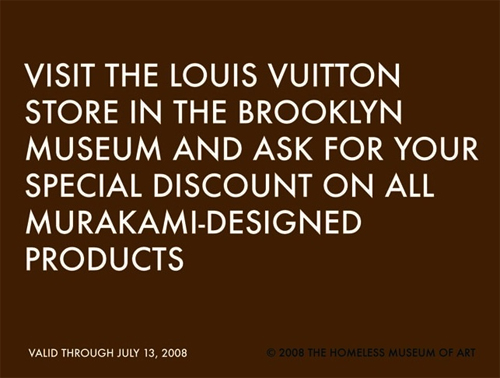


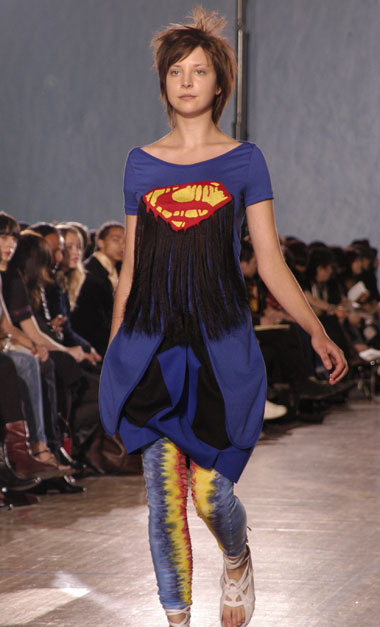


 Christian Louboutin's immortal soles have often been stolen by copyists -- but the shoe designer extraordinaire is finally preparing to save them.


 Laura Bradford isn't just aiming for fashionable fame and fortune -- she's on a stylish trajectory to sainthood. Her line of handbags,


 . [Emoticon definitely in original.]


 Each of these fabric prints may qualify for copyright protection, in the U.S. and pretty much everywhere else. That's how
  What design protection offers is the ability to protect not just the print, but the overall design of the garment. The idea is to give fashion designers rights to protect their designs. At the moment, fabric designers get protection in the U.S., while fashion designers don't.
 Although it's possible to overread the social significance of any individual fashion statement, the return of the exaggerated shoulder seems appropriate at a moment when for the first time there have been serious woman presidential candidates in both France and the U.S., Germany has a woman chancellor, a woman leads the U.S. House of Representatives, etc. At the same time, the rights of women around the world are under close scrutiny and


 Apparently our stylish canine companions aren't satisfied with


 In describing this glazed calfskin topcoat screened with the LV logo, the curator notes, "In the early 1980s, Harlem-based design entrepreneur Dapper Dan recognized the selling power of luxury. He created customized high-end products that incorporated highly recognizable accessory logos like those of Gucci and Louis Vuitton, featuring them in non-traditional ways. His clients included Biz Markie, Salt-N-Peppa, Big Daddy Kane, Roxane Shante, and Don King. Before Nike itself started making clothing, Dapper Dan created apparel with the Nike logo. The result: one-of-a-kind clothing that provided the wearer with instant visibility."


 At its core, the Big Apple is just a small town. Last weekend, I attended the grand opening of Project Runway contestant
  Congratulations to both Emmett and Diana -- and be sure to check out the boutique!





